Imagine the wind is howling across Castle Hill and the sky has turned that heavy, bruised purple we all know too well in North Queensland. As you’re taping windows and clearing the yard, a nagging thought hits: is the switchboard ready for the surge, and will the solar battery actually kick in if the grid goes down? It’s a common anxiety for Townsville families when November 1st rolls around, which is why having a reliable cyclone season electrical safety checklist is so important. We all want to protect our biggest investments, from expensive air conditioning units to high-end solar setups, but knowing exactly how to prepare the invisible parts of your home can feel overwhelming.
You shouldn’t have to guess whether your family is safe from electrical hazards during a storm. We’ve put together this comprehensive guide to help you secure your property before the clouds roll in. In this article, we’ll walk you through everything from testing your safety switches and protecting your solar investment to ensuring your backup power is ready for a long-term outage. By the time you’ve finished reading, you’ll have a clear, step-by-step plan to keep your lights on and your loved ones protected all summer long.
Key Takeaways
- Discover how to audit your switchboard and test your RCDs to ensure they provide instant protection during a tropical storm.
- Learn the specific requirements for securing solar panels and air conditioning units against North Queensland’s unique wind and humidity.
- Follow our comprehensive cyclone season electrical safety checklist to protect your home and family before the storm clouds arrive.
- Understand the vital safety protocols for handling downed power lines and managing electrical systems if water enters your property.
- Explore how solar battery storage can keep your home running smoothly during the extended blackouts that often follow a major weather event.
Understanding the Risks: Why Cyclone Season is Different in Townsville
Living in North Queensland means we’re no strangers to a bit of weather, but a tropical cyclone is a completely different beast compared to a standard afternoon thunderstorm. While most people focus on battening down the hatches and clearing the yard, the real danger often lurks within your home’s wiring. Our unique coastal environment creates a cocktail of high humidity and salt spray that can compromise even the most robust systems. This is why a cyclone season electrical safety checklist is a non-negotiable part of your yearly preparation.
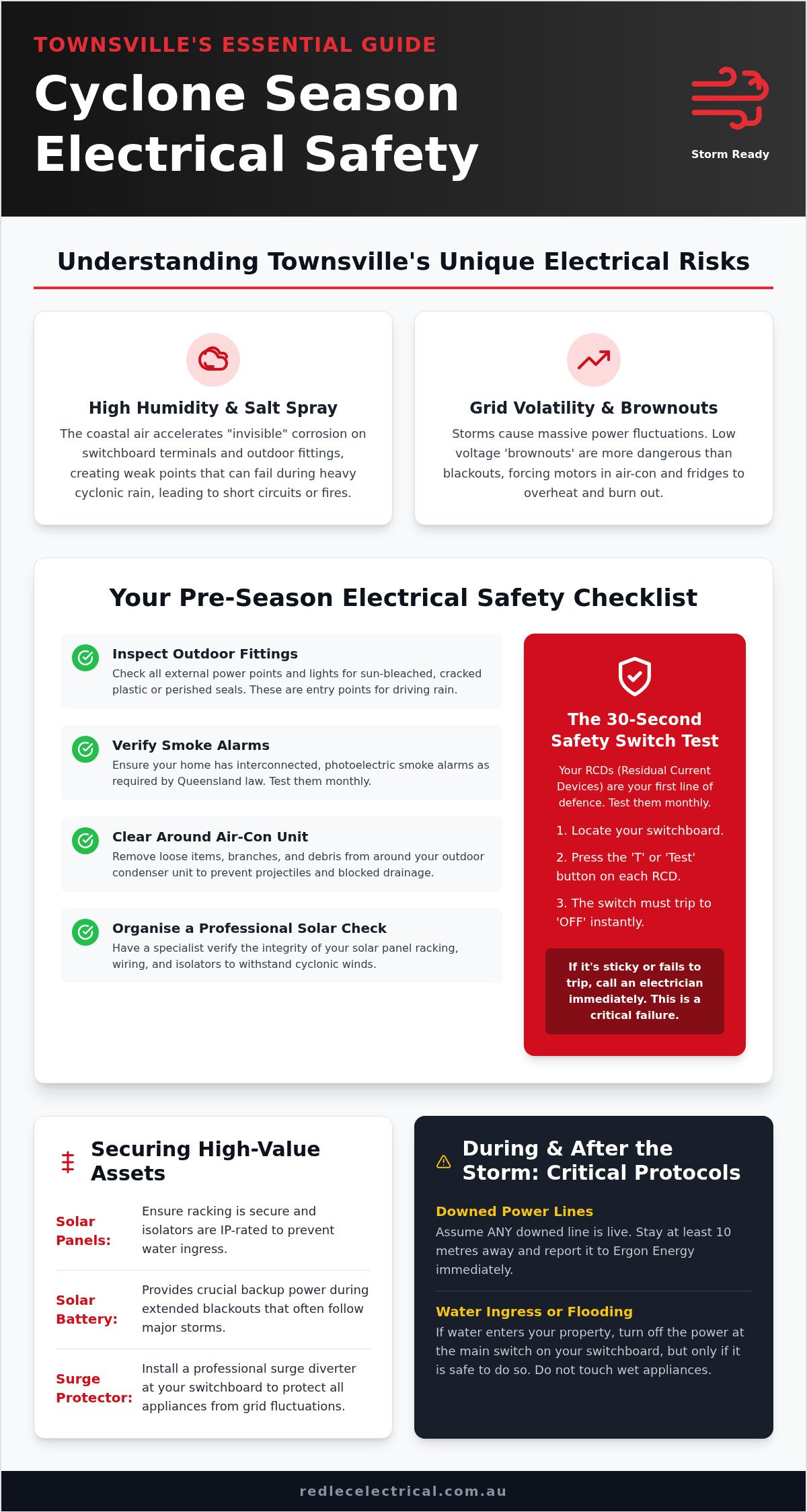
The history of Severe storms in Australia shows that cyclones bring sustained pressure that standard storms simply don’t. During the 2025-2026 season, the Australian region experienced 11 tropical cyclones, with seven reaching severe strength. For Townsville homeowners, this means your electrical system isn’t just facing rain; it’s facing “invisible” corrosion. Moisture and salt can seep into your switchboard over months of humid weather, causing terminals to degrade. When the heavy rain of a cyclone finally hits, these weakened points are the first to fail, often leading to short circuits or fires when you need power the most.
The Impact of Salt Spray and Humidity on Outdoor Wiring
If you live near the Strand or any of our coastal suburbs, your outdoor fittings are under constant attack. Salt spray is highly conductive and incredibly corrosive. It leads to a phenomenon called “tracking,” where moisture and salt build up on the surface of an insulator, eventually creating an unintended electrical path. This can cause your safety switches to trip constantly or, worse, fail to trip at all. To combat this, all external electrical work in Townsville must use high-quality, IP-rated fittings. These “Ingress Protection” ratings tell you exactly how well a fitting can resist the dust and high-pressure water common during a Category 3 or 4 event.
Grid Volatility During North Queensland Storms
Our local Ergon Energy grid is built tough, but it’s not invincible. During a cyclone, power lines can dance in the wind or be struck by falling branches, causing massive grid fluctuations. You might experience a “brownout,” where the voltage drops significantly. This is actually more dangerous for your air conditioning motors and fridge compressors than a total “blackout.” Low voltage forces motors to work harder, causing them to overheat and burn out. Installing professional surge protection at your switchboard is the best way to shield your sensitive electronics from these spikes and dips, ensuring your home remains functional once the clouds clear.
Your Pre-Season Electrical Safety Checklist
Preparation is the key to staying calm when a storm warning is issued. While we’ve discussed the environmental threats like salt spray and humidity, translating that knowledge into action is what keeps your family safe. Ticking off a cyclone season electrical safety checklist before November ensures you aren’t caught out by a preventable fault. Start at the heart of your home: the switchboard. Look for signs of moisture entry, rust, or outdated ceramic fuses that might struggle under the load of a modern Townsville household.
- Inspect outdoor fittings: Walk around your property and check every external power point and light. Look for sun-bleached plastics that have cracked or seals that have perished; these are entry points for driving rain.
- Verify smoke alarm compliance: Under the Electrical Safety Regulation 2026, your smoke alarms must be in top working order. Remember that all Queensland homes must have interconnected, photoelectric smoke alarms by January 1, 2027.
- Clear around the A/C: Ensure the area around your outdoor condenser is clear of debris that could become a projectile or block drainage during a deluge.
- Professional solar check: If you haven’t had your system looked at in over a year, organise a specialist to verify the integrity of your racking and isolators.
The 30-Second Safety Switch Test
Your RCDs (Residual Current Devices) are designed to save lives by cutting power in milliseconds if a fault is detected. To test them, simply press the “T” or “Test” button on each switch in your board. The switch should instantly flip to the “Off” position. If it doesn’t trip, or if the lever feels “sticky” or hard to move, the internal mechanism may be corroded. This is a critical failure that needs immediate attention. While you’re at the switchboard, it’s the perfect time to learn how to test smoke alarms to ensure your entire early-warning system is ready for the summer storm season.
Surge Protection: Safeguarding Your Expensive Gear
Many homeowners rely on cheap power boards from the supermarket, but these won’t stand a chance against a direct lightning strike or a major grid fluctuation during a cyclone. Whole-house surge protection is installed directly into your switchboard to provide a primary line of defence. This protects your high-value assets, such as your solar inverter, smart fridge, and home theatre system, by diverting excess voltage safely to the ground. If you’re unsure about the state of your wiring, a quick chat with our team about switchboard upgrades can provide that extra layer of security before the first storm hits.
Securing High-Value Assets: Solar, Batteries, and Air Con
Your home’s roof and exterior bear the brunt of any tropical system. While the switchboard is your internal safety hub, your solar panels and air conditioning units are your most exposed investments. Townsville sits squarely in Wind Region C, which means our building standards are much stricter than those in Brisbane or Sydney. Integrating these specific hardware checks into your cyclone season electrical safety checklist prevents thousands of dollars in avoidable damage and ensures your backup systems actually perform when the grid goes down.
Cyclone-Proofing Your Solar Power System
Solar panels are essentially large sails. If the racking isn’t secured properly, the uplift from Category 3 or 4 winds can tear panels clean off your roof. Walk around your home and look up; you’re checking for any loose mounting brackets or DC cabling that has come untethered and is flapping in the breeze. Frayed cables are a major fire risk when they get wet. Investing in professional solar repairs before the wind picks up ensures that your mounting system meets current AS/NZS 1170.2 wind load design standards. A quick inspection now stops your panels from becoming dangerous projectiles during a storm.
Maximising Blackout Resilience with Battery Storage
If you’ve invested in a battery storage system, you have a significant advantage during the long-term outages that often follow a cyclone. Most modern systems feature “Island Mode,” which allows your home to operate independently from the Ergon grid. When a cyclone watch is declared, check your battery app and set your reserve capacity to 100%. This ensures you have a full tank of energy before the first power line falls. You should also decide which essential circuits to prioritise; keeping your fridge, Wi-Fi, and a few LED lights running is much more important than trying to power the whole house during a blackout.
Air Conditioning Integrity in High Winds
Air conditioning units are often overlooked until they start rattling. Check the structural integrity of the wall mounts for your split systems, as North Queensland humidity can weaken older metal brackets over time. You should also inspect the slimline ducting that protects your pipes; if this is loose, the wind can easily tear it away, exposing your refrigerant lines to damage. As a final precaution, always turn your air conditioner off at the external isolator switch before the storm hits. This prevents the unit from trying to restart during “brownouts” or rapid power fluctuations, which can easily burn out an expensive compressor motor.
During and After the Storm: Critical Safety Protocols
When the wind is peaking and the rain is driving sideways, the items on your cyclone season electrical safety checklist transition from preparation to active hazard management. Safety during the event is about quick, calm decisions. If you notice water leaking through the ceiling near light fittings or dripping down the walls towards power points, the risk of electrocution or fire increases instantly. Don’t wait for a spark. If it’s safe to reach your switchboard, turn off the main power switch immediately. Always use a torch rather than your phone’s screen to see what you’re doing, and ensure your hands are as dry as possible before touching any metal components.
The most critical rule for the aftermath is staying well away from fallen power lines. Treat every downed wire as live and dangerous. In Townsville, Ergon Energy protocols require a minimum distance of 8 metres, which is roughly the length of two cars, to avoid “step voltage” where electricity travels through the wet ground. If you’re using a portable generator to keep the fridge running, never attempt to “back-feed” your home by plugging it into a standard wall outlet. This sends power back into the grid, which can be fatal for utility workers trying to restore the lines. Instead, plug your appliances directly into the generator using heavy-duty, outdoor-rated extension cords.
Emergency Electrical Procedures
If an electrical fire starts, never use water to extinguish it. This can cause a massive shock or even an explosion. Use a dry powder extinguisher if you have one, but your priority is always getting your family to safety. It’s a good idea to keep the number for an emergency electrician taped to the inside of your pantry door or saved in your phone’s favourites. Having professional support on standby means you won’t be scrambling for help when the grid is unstable and the weather is at its worst.
Post-Cyclone Inspection: Spotting Hidden Damage
Once the “all clear” is given, resist the urge to flip every switch back on at once. Walk around your property and check for water ingress in outdoor power points or light fittings. If an appliance has been submerged or even just heavily splashed, it must be professionally tested before you plug it back in. Solar panels also need a visual check from the ground. Look for micro-cracks or shifted panels caused by hail or flying debris. Even if the system seems to be working, hidden damage can lead to hot spots and fire risks later in the season. If you’ve encountered storm damage, our team provides emergency electrical repairs to get your home back to normal safely.
Why Professional Prep with Redlec is Your Best Defence
Ticking off your own cyclone season electrical safety checklist is a fantastic start, but there are technical vulnerabilities that only a trained eye can spot. Matt and the team at Redlec live and work right here in Townsville. We understand exactly how North Queensland humidity eats away at outdoor isolators and how tropical heat stresses solar inverters. When you choose a local expert, you’re getting more than just a service; you’re getting the peace of mind that comes from a team that has lived through every major weather event in the region over the last decade.
Our expertise doesn’t stop at the front door of your home. Local businesses face unique risks during storm season, ranging from data loss to dangerous equipment failure. We offer comprehensive commercial electrical services to ensure your storefront or warehouse is as resilient as your house. Whether it’s a switchboard upgrade to meet modern safety standards or a full audit of your backup power systems, our licensed and insured team delivers the steady hand you need when the clouds start to gather.
The Redlec Pre-Season Audit
Our 20-point safety inspection is designed to leave nothing to chance. We go deep into your electrical infrastructure, checking everything from the structural integrity of your solar racking to the millisecond response time of your RCDs. We specifically look for “invisible” failure points, such as loose connections in your switchboard or thermal damage in solar battery setups that could escalate during a power surge. It’s about proactive care that keeps Townsville families safe and ensures your essential appliances keep running when you need them most.
24/7 Emergency Support When You Need It Most
Even with the best preparation, extreme weather can be unpredictable. That’s why Redlec provides 24/7 emergency electrical repairs for storm-related damage. If a branch takes out your service fuse or water ingress causes a total power failure in the middle of the night, we’re ready to respond. You can contact our team via our emergency line, knowing that a reliable local expert will be there to make your property safe again. Don’t leave your home’s safety to chance this summer. Contact Redlec today to book your cyclone safety check and face the storm season with total confidence.
Stay Safe and Powered This Storm Season
Preparing your home for North Queensland’s unpredictable weather doesn’t have to be a source of anxiety. By following a structured cyclone season electrical safety checklist, you’ve already taken the most important step toward protecting your property and your loved ones. Remember that staying ahead of issues like switchboard corrosion and securing your solar mounting is far easier than dealing with emergency repairs in the middle of a Category 3 event. Whether it’s ensuring your battery storage is ready for “Island Mode” or testing your safety switches, proactive maintenance is your best defence against the elements.
If you’re feeling unsure about any part of your system, our team is here to help. As local Townsville electricians who live and breathe the NQ climate, we specialise in solar, battery, and A/C safety. We’re also on hand with a 24/7 emergency response should the worst happen during a storm. Don’t wait for the first warning to be issued; secure your home for cyclone season with a Redlec safety audit today. We take pride in keeping our community safe, so you can enjoy the summer with true peace of mind.
Frequently Asked Questions
Is it safe to leave my solar panels on during a cyclone?
It is generally safe to leave solar panels on, but you should follow the shutdown procedure if you suspect damage to the grid or your roof. Modern panels in Townsville are installed to meet high wind load standards for Region C. However, if a severe warning is issued, turning the system off at the inverter and the main switchboard prevents electrical surges from damaging your components when the grid fluctuates during the storm.
Can I use my home battery if the main power grid goes down?
You can use your home battery during a blackout if your system includes a backup gateway or “Island Mode” functionality. This feature automatically disconnects your home from the grid so your stored energy can power essential circuits like lights and refrigeration. It’s a vital part of any cyclone season electrical safety checklist to ensure your reserve levels are set to 100% before the storm hits, giving you maximum runtime while the grid is being repaired.
What should I do if my switchboard gets wet during heavy rain?
If water enters your switchboard, you must turn off the main power switch immediately, provided it is safe to do so and you are standing on a dry surface. Water and electricity are a lethal combination that can cause arcing or fires. Once the power is isolated, do not attempt to turn it back on yourself. You’ll need a licensed electrician to inspect the board, dry the components, and verify that no hidden damage has occurred.
How often should I test my safety switches (RCDs) in Townsville?
You should test your safety switches at least every six months, but we recommend a check right before the storm season begins in November. In Townsville, the high humidity and salt air can cause internal mechanisms to stick or corrode over time. It’s a small but vital part of your cyclone season electrical safety checklist that ensures the device still trips within milliseconds. If it fails to trip, call for a professional replacement immediately.
Is it safe to run a portable generator inside my garage during a storm?
No, it is never safe to run a portable generator inside a garage, even with the door open. Generators produce carbon monoxide, a colourless and odourless gas that can be fatal in enclosed spaces. Always operate your generator outdoors in a well-ventilated area, at least six metres away from windows and doors. Ensure it stays dry under a dedicated cover or open-sided structure to prevent electrical faults while protecting it from the North Queensland rain.
Do I need a special switch to connect a generator to my home?
Yes, you need a professionally installed changeover switch to safely connect a generator to your home’s wiring. This switch prevents back-feeding, which is the dangerous process of sending electricity back into the main grid. Back-feeding puts Ergon Energy workers at risk of electrocution while they are fixing downed lines. A changeover switch allows you to safely toggle between grid power and generator power, ensuring your home’s circuits are isolated from the street at all times.
What are the signs that my solar inverter has been damaged by a surge?
Common signs of surge damage include a blank display screen, unusual error codes, or the fault light staying illuminated. You might also notice a burnt smell or visible scorch marks around the casing. If your system stops producing power after a lightning strike or a series of brownouts, the internal circuit boards have likely been fried. In these cases, you’ll need professional solar repairs to diagnose the extent of the damage and restore your energy production.
Why does my power keep flickering during a tropical storm?
Power flickers during a tropical storm are usually caused by branches hitting power lines or the wind causing lines to touch, triggering automatic safety resets on the Ergon grid. These rapid fluctuations can create voltage spikes that are hard on your appliances. If the flickering is constant, it’s best to turn off sensitive electronics at the wall. This protects your gear from the brownout conditions that often precede a total blackout in Townsville during severe weather.