Would your emergency exit lights stay illuminated for ninety minutes if mains power cut out this afternoon? Understanding the exact emergency lighting testing requirements QLD property owners must follow is often frustrating, especially when trying to balance state fire safety regulations against technical Australian standards.
You already know that workplace safety is non-negotiable, but keeping up with routine inspections, certified technician sign-offs, and logbook entries can quickly feel overwhelming. To make matters tougher, our harsh North Queensland heat constantly punishes backup batteries inside ceiling cavities, accelerating degradation and creating serious failure risks during surprise Queensland Fire Department audits.
You will learn the precise testing intervals, discharge rules, and documentation standards needed to keep your commercial property secure and legally compliant. We have laid out a straightforward compliance checklist so you can verify your system, satisfy inspection authorities, and enjoy genuine peace of mind.
Key Takeaways
- Understand how state safety rules work alongside AS/NZS 2293 to meet every mandatory emergency lighting testing requirements QLD property owners must follow.
- Discover the schedule behind the six-monthly 90-minute battery discharge test and annual maintenance checks to keep exit paths safely illuminated.
- Learn how intense Townsville heat and local wildlife cause premature battery failure in ceiling voids, and how to safeguard your fittings.
- Follow a practical checklist to inspect illuminated exit signs, verify charging indicator LEDs, and spot hardware faults early.
- Clarify on-site logbook documentation rules and legal sign-offs so your facility remains ready for Queensland Fire Department audits.
Queensland Emergency Lighting Regulations and Australian Standards Explained
Emergency lighting systems serve a simple, life-saving purpose: they illuminate safe paths of travel and exit doorways when regular mains power cuts out. In commercial facilities, these systems guide workers and visitors safely out of the building during a black-out or structural fire. Meeting emergency lighting testing requirements QLD regulations demand is not just about ticking a box; it is about protecting human life and keeping your commercial doors legally open.
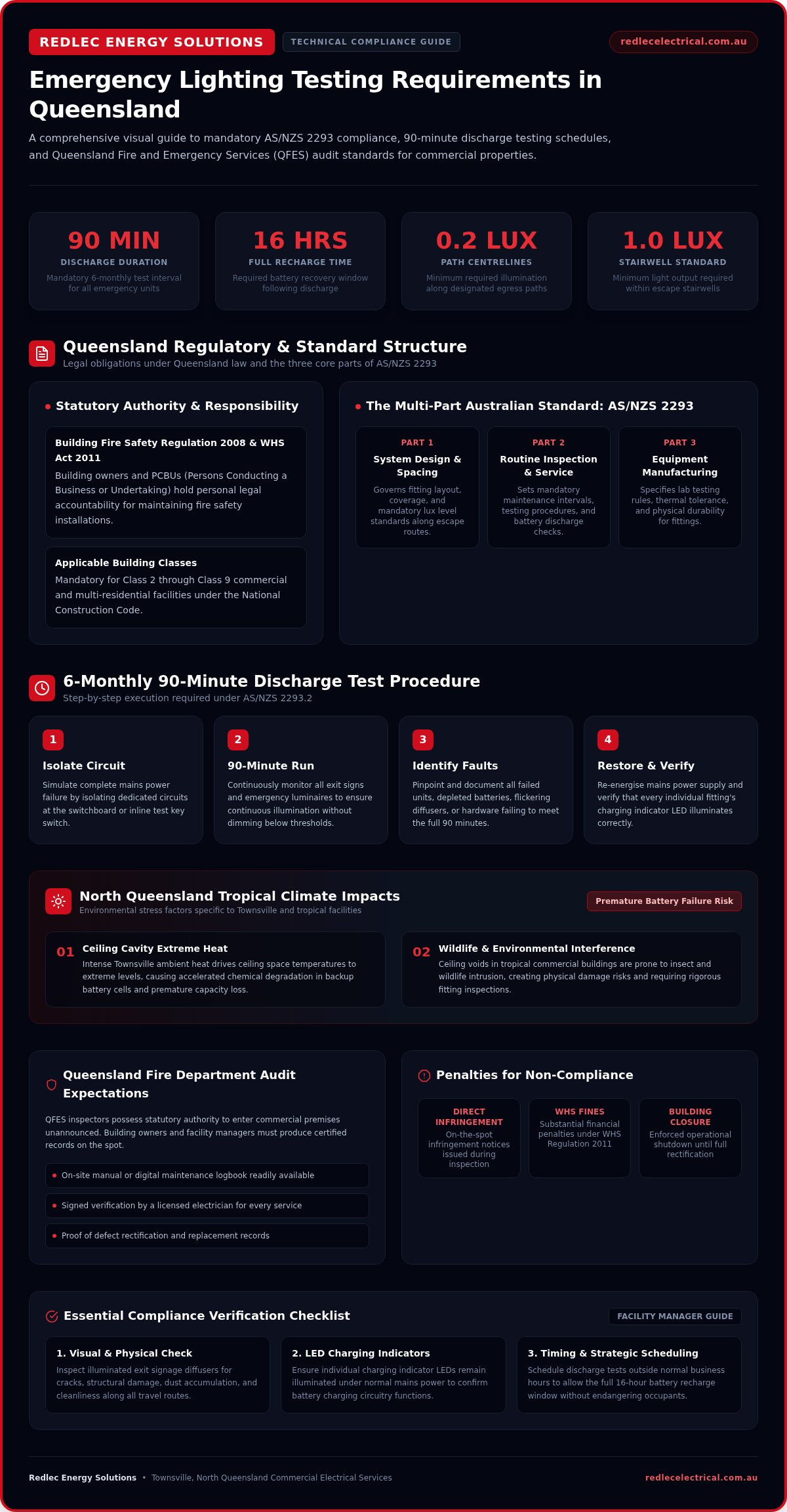
The overarching mandate stems from the Queensland Building Fire Safety Regulation 2008 alongside the Work Health and Safety Act 2011. Under these laws, the person conducting a business or undertaking (PCBU), or the building owner, carries personal legal accountability for maintaining essential fire safety installations. Additionally, the National Construction Code requires illuminated exit signs and emergency luminaires along all primary escape routes, stairwells, and corridors across Class 2 through Class 9 commercial buildings.
The Role of AS/NZS 2293 in Commercial Buildings
Queensland law enforces compliance through the multi-part Australian Standard AS/NZS 2293. Knowing how each part impacts your workplace helps avoid costly operational blind spots:
- AS/NZS 2293.1: Sets the rules for system design, installation spacing, and operational performance. It dictates where fittings must sit and calls up minimum light output, such as 0.2 lux along escape path centrelines and 1 lux inside stairwells.
- AS/NZS 2293.2: Governs routine inspection, maintenance routines, and mandatory battery discharge intervals. This part dictates the ongoing servicing required for all operational facilities.
- AS/NZS 2293.3: Details laboratory testing and manufacturing specifications for emergency luminaires and exit signs, ensuring fittings withstand internal heat and normal electrical wear.
Queensland Fire and Emergency Services Legal Expectations
Queensland Fire and Emergency Services (QFES) inspectors possess statutory authority to enter commercial premises unannounced to audit life-safety systems. When they arrive, they will ask to see certified maintenance logs proving that your emergency lighting testing requirements QLD obligations are completely up to date.
Both building owners and appointed facility safety managers share the duty of providing these records on the spot. If an audit uncovers unserviced equipment, missing logs, or discharged batteries, QFES can issue on-the-spot infringement notices. Severe non-compliance or outright failure to maintain an emergency plan can lead to substantial fines under the Work Health and Safety Regulation 2011, or even building closure orders until a licensed electrician rectifies and certifies every fitting.
Mandatory Emergency Lighting Testing Schedule: 6-Monthly and Annual Requirements
Fulfilling the emergency lighting testing requirements QLD mandates is not a once-a-year thought. Australian Standard AS/NZS 2293.2 splits compliance into clear semi-annual and annual intervals. Testing must take place during quiet operational periods or outside standard business hours. When you drain backup batteries for testing, your building is temporarily left without emergency reserves while units recharge, which can take up to 16 hours. Scheduling your tests strategically prevents unnecessary risk to workers and visitors.
Facilities typically manage this process through manual key switches or automated monitoring systems. While computerised self-testing luminaires can log discharge cycles digitally, older or standard commercial properties rely on a licensed electrician to manually trigger and assess the system circuit by circuit.
The 90-Minute Battery Discharge Test
Every six months, your facility must undergo a full 90-minute battery discharge test. During this service, your electrical technician will:
- Simulate a complete power failure by isolating dedicated emergency lighting circuits at the switchboard or operating an inline test switch.
- Monitor all exit signs and emergency luminaires to ensure they stay illuminated for the full 90 minutes without failing or dimming below standard lux thresholds.
- Identify and log any failed batteries, flickering tubes, or damaged fittings that quit early.
- Restore mains supply and verify that every unit switches back into battery charging mode.
Annual Visual Inspections and Cleaning
The annual service combines the 90-minute discharge test with thorough physical maintenance. In Townsville and across North Queensland, heat, airborne dust, and insects frequently penetrate light diffusers. If diffusers become clouded with grime or dead insects, your fittings cannot cast the minimum light levels required by safety codes along escape corridors.
During the annual inspection, your technician removes diffusers to clean lenses, inspects internal control gear, and checks terminal connections for thermal stress. They also inspect mounting brackets and integrity to ensure every unit remains structurally sound. Teaming up with experienced professionals for scheduled commercial electrical maintenance keeps your system dependable year-round while taking the guesswork out of compliance.
Your Step-by-Step Queensland Emergency Lighting Compliance Checklist
Staying on top of emergency lighting testing requirements QLD regulations demand does not have to feel chaotic. When you break the process into methodical visual reviews, technical discharge runs, and clean paperwork, keeping your commercial facility compliant becomes second nature. Use this practical walkthrough to audit your site before an inspector arrives.
Visual and Physical Inspection Points
Routine visual audits can be carried out between scheduled technical services to catch obvious issues early:
- Sightlines: Confirm illuminated exit signs remain visible from every occupied area. Stock, pallets, and temporary display signs must never block an exit route.
- Physical casing: Inspect each fitting for cracked diffusers, loose screws, or damaged housings that could expose wiring or invite pests.
- Indicator lamps: Check that the small green LED on every self-contained fitting glows steadily, confirming active connection to the mains supply.
Testing and Operational Verification
Every six months, a licensed electrician must conduct functional discharge testing. The technician isolates the emergency circuits at the switchboard using the test facility, simulating complete power failure. During the full 90-minute blackout window, they walk the property to inspect every corridor, doorway, and fire stairwell.
Any fitting that cuts out early, flickers, or drops below safe illuminance must be flagged immediately for component replacement. Engaging professional commercial electrical services in Townsville ensures these functional assessments are performed accurately without disrupting your everyday business operations.
Documentation and Record Sign-Off
Testing without documentation leaves your facility vulnerable during a fire audit. Meeting the emergency lighting testing requirements QLD sets down means keeping a clear paper trail:
- Core test details: Note the testing date, the nature of the test (semi-annual or annual), and the licensed technician’s full name and licence number.
- Asset log: Record individual luminaire IDs, noting whether each unit passed or failed, alongside specific remedies such as battery or tube replacements.
- Compliance sign-off: Secure a signed certificate or formal entry in your on-site logbook from your electrical contractor upon job completion.
Promptly action any recommended repairs. Replacing dead battery packs or faulty LED arrays straight away ensures your property remains protected and compliant every day of the year.
Common System Faults, Tropical Climate Impacts, and Rectification Rules
Operating a commercial facility in North Queensland exposes electrical gear to environmental stresses southern properties simply do not experience. While national codes outline standard discharge schedules, meeting the true spirit of emergency lighting testing requirements QLD demands means accounting for Townsville’s intense ambient heat, seasonal storms, and local wildlife. These tropical factors trigger specific physical faults that can quickly disable your life-safety gear.
Legacy fluorescent tubes are especially vulnerable in these conditions. The combination of fragile starters and intense background heat causes frequent tube blackening and ballast failures. Upgrading to modern LED emergency luminaires eliminates delicate filaments, drops internal operating temperatures, and delivers far superior energy efficiency. Even with modern fittings, ceiling cavities remain harsh operating environments that test internal electronics daily.
Tropical Heat and Battery Life in North Queensland
Ceiling spaces in Townsville commercial properties regularly exceed fifty degrees during the wet season. This sustained thermal cycling punishes internal battery chemistry:
- Accelerated chemical breakdown: Prolonged heat degrades the internal cells of nickel-cadmium and lithium battery packs, drastically shortening their usable service life compared to systems installed in temperate climates.
- Premature discharge failure: Batteries that show a healthy green charging LED on Monday can fail to hold charge during a simulated power outage by Friday, dropping well short of the mandatory 90-minute run time.
- Pest ingress: Geckos, mud wasps, and tropical insects seek shelter inside warm luminaire casings. Without an adequate Ingress Protection rating (IP rating), nesting pests bridge printed circuit boards, triggering short circuits and blown control gear.
The 16-Day Queensland Defect Rectification Rule
Discovering a failed emergency luminaire during routine testing starts a strict regulatory countdown. Under the Queensland Building Fire Safety Regulation 2008, building occupiers must rectify any critical safety installation defect within 16 days of identification.
Ignoring a dead fitting or letting repairs slide past this window leaves you exposed during Queensland Fire and Emergency Services audits. If replacement parts face freight delays, your safety officer must record temporary mitigation steps directly in the site logbook to demonstrate proactive compliance. Once a replacement unit or battery is wired in, your contractor must re-test the fitting under a full 90-minute discharge before signing off the repair. You can book emergency electrical repairs to ensure faulty fittings are replaced and certified well within legal deadlines.
Logbook Requirements: How to Maintain Audit-Ready Safety Records
Completing physical discharge runs means very little if your paperwork fails inspection. Under Queensland legislation, keeping meticulous, accessible maintenance records is just as legally binding as the electrical tests themselves. Meeting emergency lighting testing requirements QLD inspectors enforce means your logbook must be immediately accessible on site whenever a Queensland Fire and Emergency Services officer walks through your door.
You can manage this documentation through a physical logbook binder stored inside your main electrical cupboard, or via an approved digital safety portal. If you adopt digital records, ensure local site supervisors can pull up recent test sheets on demand. In the event of a fire or workplace incident, current logbooks serve as your primary legal shield, proving you exercised full due diligence to protect building occupants and preventing insurers from denying coverage.
Mandatory Information for Your Testing Register
A legally sound safety logbook must capture clear operational facts rather than vague checkmarks:
- Property credentials: Record the site address, building classification, system configuration, and baseline design parameters.
- Individual test metrics: Detail the date of each test, the specific circuit isolated, the duration of the run, and the functional result for each luminaire ID.
- Defect rectification: Document every component failure, replacement parts ordered, and the exact date your contractor certified the repair.
- Retention period: Keep all inspection sheets and contractor sign-offs securely on site for a minimum of two years to satisfy statutory audit reviews.
Why Professional Electrical Support Matters
Self-testing can catch obvious physical damage, but Queensland law requires a qualified electrical contractor to sign off mandatory technical reports. An experienced licensed electrician assesses underlying wiring, checks fault-loop impedance, and verifies compliance with Australian Standard AS/NZS 3000 alongside your emergency fittings.
Scheduling these visits gives you a great opportunity to combine testing routines. Having your electrical technician assess switchboards and RCD safety switches alongside emergency egress lights ensures your total electrical infrastructure remains safe and reliable. In addition, learning how to test smoke alarms provides a well-rounded baseline for emergency preparedness throughout your property. When you want total confidence that your installation meets every standard, contact Redlec Energy Solutions to book compliant testing across your Townsville property.
Secure Your Facility With Reliable Emergency Lighting Compliance
Protecting your staff, customers, and commercial property starts with dependable exit paths when unexpected power cuts occur. Fulfilling every mandatory emergency lighting testing requirements QLD standard comes down to steady routines: running strict six-monthly 90-minute discharge tests, tackling Townsville’s battery-draining ceiling heat, and keeping an audit-ready logbook on site.
You don’t have to navigate complex safety codes alone. With qualified licensed electricians experienced in Australian Standard AS/NZS 2293, our local Townsville team handles everything from routine switchboard checks and RCD testing to prompt defect repairs. We take the hassle out of compliance paperwork so you can focus on running your business with genuine confidence.
Book your Queensland emergency lighting compliance audit with Redlec Energy Solutions today and enjoy complete peace of mind knowing your building is safe, certified, and fully prepared for any inspection.
Frequently Asked Questions
How often must emergency lighting be tested in Queensland commercial buildings?
Queensland commercial facilities must undergo routine testing every six months, alongside an annual physical inspection. Under AS/NZS 2293.2, every luminaire and exit sign must complete a full 90-minute battery discharge test semi-annually. Aligning with emergency lighting testing requirements QLD regulations ensures your egress paths remain safely illuminated if mains power fails, keeping your premises certified and legally compliant year-round.
Can facility managers or business staff conduct emergency lighting testing themselves?
Staff can perform quick visual reviews, such as checking for damaged diffusers or confirming that green charging LEDs are active. However, formal six-monthly 90-minute discharge tests and annual maintenance require a qualified licensed electrician. Technical testing involves circuit isolation at the switchboard, verifying illumination levels, and signing statutory compliance logs that satisfy Queensland Fire and Emergency Services inspectors during audits.
What happens if an emergency light fails the 90-minute discharge test?
If a unit goes dark, flickers, or dims below standard light levels before ninety minutes elapse, the technician records it as an immediate fail. The specific fitting ID and fault details enter your logbook. The building owner or safety manager must arrange prompt replacement of the degraded battery or entire luminaire, followed by a re-test to restore certified compliance.
What is the 16-day defect rectification rule under Queensland fire safety laws?
Under the Queensland Building Fire Safety Regulation 2008, you have a strict legal deadline of 16 days to repair any critical safety defect found during testing. If parts are delayed, your safety officer must record temporary risk controls directly into the logbook. Resolving defects quickly keeps emergency egress routes clear and prevents severe fines during unplanned fire department audits.
Do illuminated exit signs require the exact same testing as emergency spitfires and floodlights?
Yes, illuminated exit signs follow the identical testing standards as recessed spitfires and emergency floodlights. Under Australian Standard AS/NZS 2293, all self-contained emergency fittings must maintain required illumination for a minimum of 90 minutes on backup battery power. Meeting emergency lighting testing requirements QLD guidelines means inspecting exit signs for unobstructed visibility, legibility, and physical lens cleanliness at every scheduled service.
How long must Queensland businesses keep emergency lighting logbook records on site?
Queensland legislation requires commercial facilities to maintain life-safety logbooks on site for at least two years. However, industry standards recommend archiving records for up to seven years. Having historical discharge test records immediately accessible ensures your business passes surprise fire audits and provides clear documentation if an insurer reviews your workplace safety history after an incident.
Why do emergency light batteries fail faster in North Queensland properties?
Townsville’s tropical climate creates intense ambient heat that collects inside unventilated ceiling voids, often exceeding fifty degrees during summer. High operating temperatures degrade the chemical cells inside lithium and nickel-cadmium backup batteries much faster than in cooler southern regions. Regular thermal cycling weakens charging circuits, making strict six-monthly testing essential for identifying dead batteries before a genuine emergency strikes.