A switchboard upgrade can do more than replace ageing equipment. The benefits of upgrading to a smart switchboard include clearer insight into household energy use, support for solar or battery systems, and modern protection such as circuit breakers and RCD safety switches. Some smart switchboards can also help you monitor electricity consumption and identify where energy may be going to waste.
When weighing up an upgrade, consider both safety and everyday usefulness. In Townsville, where air conditioning can add demand to a home’s electrical system, a switchboard suited to your needs can support how you use power now and help plan for changes such as solar or battery storage.
This article explains how smart switchboards monitor energy, work with solar and batteries, and help protect electrical circuits. You’ll also learn which signs may point to an upgrade and how to decide whether smart features suit your setup.
Key Takeaways
- Consider an upgrade if your current board has limited room for added circuits or the electrical demands of cooling and other appliances.
- Energy monitoring can help you see when your home uses power and identify opportunities to reduce waste.
- A suitable switchboard can support the electrical connections needed for rooftop solar and battery storage.
- Understand how circuit breakers and RCD safety switches protect different parts of your home’s electrical system.
- Redlec Energy Solutions offers electrical services, solar power systems and battery storage options for homes in Townsville.
Why Upgrade Your Electrical Switchboard?
A switchboard upgrade can accommodate additional circuits, changing household demand and improved electrical protection. In Townsville, you might consider one when adding air conditioning, rooftop solar or an electric vehicle charger.
Capacity for added circuits and loads
Switchboard capacity is its ability to support the circuits and electrical loads connected to your home. Adding an air conditioner, kitchen appliance or EV charger can increase demand, so the board needs to suit the planned equipment. Running several high-demand devices at once, for example, can put pressure on existing circuits. An electrician can assess the switchboard and the home’s electrical supply before you plan additions.
Preparing infrastructure for future expansion
When assessing your electrical setup, include likely future additions in the plan. A modern switchboard can be designed to accommodate higher loads and future circuits. Solar systems may need dedicated circuits and meters, which clean energy providers like Redefining Solar emphasise when preparing properties for renewable power, while an EV charger needs a suitably rated switchboard to help prevent overloading. Tell the electrician about planned equipment, even if installation is some way off, so the assessment reflects how you intend to use it.
Residual current and electrical fault protection
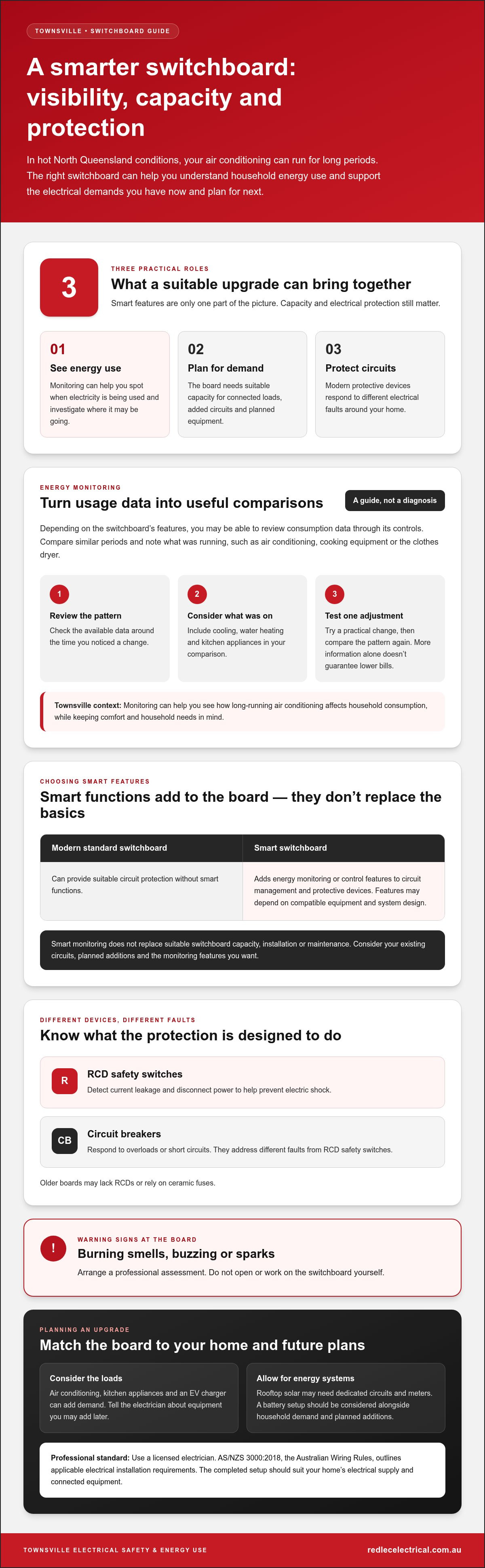
Residual current devices, also called RCD safety switches, detect current leakage and disconnect power to help prevent electric shock. Circuit breakers respond to overloads or short circuits, so each device addresses different faults. Older boards may lack RCDs or rely on ceramic fuses. If you notice burning smells, buzzing or sparks at the board, arrange a professional assessment rather than opening or working on it yourself.
Smart and standard switchboard differences
A smart switchboard adds energy monitoring or control features to the circuit management and protective devices in a modern switchboard. A standard modern board can provide suitable circuit protection without these smart functions. Monitoring or remote control may be useful if you want to review household electricity use or control selected devices, but it doesn’t replace the need for suitable capacity, installation and maintenance.
For Australian electrical installations, AS/NZS 3000:2018, the Wiring Rules, outlines the applicable standards. Use a licensed electrician for the upgrade. The standard sets electrical installation requirements; it does not itself establish that every switchboard upgrade needs separate council approval.
Like other electrical equipment, a smart switchboard needs appropriate maintenance and professional inspection. Its smart features may also depend on compatible equipment and system design, so they may not suit every home. Before choosing an upgrade, consider your existing circuits, planned additions and the monitoring features you want.
Energy monitoring and efficiency
A smart switchboard with energy monitoring can track household electricity use and help you understand where power is going. The benefits of upgrading to a smart switchboard include seeing patterns that may be difficult to spot from a bill alone. For example, you can compare energy use when the air conditioning, cooking equipment or clothes dryer is operating.
Monitoring turns energy use into information you can act on. Depending on the switchboard’s features, you may be able to review consumption data through its controls. Look for changes after adjusting appliance use or settings, then compare similar periods. This helps distinguish a genuine change from ordinary day-to-day variation.
This insight can be useful in Townsville, where hot North Queensland conditions can mean air conditioning runs for long periods. If your household uses cooling through the afternoon, monitoring can show how that routine affects total electricity consumption. You can then consider practical adjustments, such as changing when you run another energy-intensive appliance, while keeping comfort and household needs in mind.
Energy monitoring can also help you investigate an unexpected rise in consumption. Start by reviewing the available data from around the time you noticed the change. Consider what was running, including cooling, water heating and kitchen appliances. If the pattern continues, an electrical assessment can help determine whether equipment, circuit needs or another issue warrants attention. The data is a guide, not a diagnosis of an electrical fault.
Capacity still matters as you add modern appliances and energy systems. A smart switchboard’s monitoring functions help you understand consumption, but the electrical system must remain suitable for its connected loads. If your home has rooftop solar or a battery, consider how household demand changes throughout the day. Monitoring can help you compare usage patterns with the times you run major devices.
More information alone doesn’t guarantee lower bills. Savings depend on your household’s electricity use and the changes you make. Monitoring may help identify avoidable consumption, such as cooling an empty room or running several high-demand appliances together. Test one practical change at a time, then review whether the pattern shifts. This gives you a clearer basis for energy-efficiency decisions.
If you’re considering monitoring as part of an upgrade, an electrical system assessment can help relate your household’s needs to its existing setup.
Suitability for homes with rooftop solar or a home battery
Choose a smart switchboard by matching its capacity and features to your rooftop solar, battery, appliances and future plans. A licensed electrician can assess your existing electrical system, plan the installation and test the completed work against AS/NZS 3000:2018, the Australian Wiring Rules.
Solar panels, an inverter and household circuits need to work together. The inverter converts electricity from the panels into power for home use and interaction with the grid. A suitable switchboard can accommodate the dedicated circuits and meters a solar system may need, providing an appropriate electrical connection rather than treating the panels as an isolated addition to your roof.
If you’re considering solar battery storage, include the battery in your plans, even if you intend to add it later. A battery stores excess solar energy for use later, such as when household demand continues after solar generation falls. For instance, residential specialists like SolarGrid Perth design setups where home batteries and solar arrays coordinate smoothly with the property’s switchboard. The switchboard and connected circuits must suit the proposed system. Discussing both solar and battery plans during an assessment helps account for their combined electrical requirements.
Smart switchboards can integrate with LED lighting, smart appliances and solar panels, but that doesn’t mean every board automatically controls every device. Features vary, so consider what you want to monitor or control, such as lighting or an appliance circuit. In a Townsville home, you might plan around solar generation, daytime cooling and evening appliance use, while keeping electrical safety and circuit protection central.
Considering an electric vehicle charger as well? Include it in your solar and battery plans. A charger must connect to a suitably rated switchboard to help prevent overloading. The electrician considers the existing supply, board capacity and other major loads, such as air conditioning. Planning these together can make future additions easier and help avoid a charger competing with existing household demand.
During an assessment, describe your current setup and planned additions, such as rooftop panels, a battery, an EV charger, LEDs or smart appliances. The electrician can assess the circuits, protective devices and space needed for the planned installation, then test the completed work. Circuit breakers protect individual circuits from overloads or short circuits; smart switchboards are also designed to detect faults. Suitable equipment and correct installation work together to support electrical safety and peace of mind.
These features can suit households that want monitoring or are adding solar-linked equipment. If your current board supports your electrical loads and you don’t need smart functions, upgrading solely for connectivity may offer little practical value. Start with the equipment you have and the changes you expect, then base your decision on your home’s electrical requirements.
RCDs, circuit breakers and surge protection
A well-organised switchboard helps you identify and manage the protective devices serving your home. In Townsville, consider how storm-related voltage spikes, household wiring and connected appliances affect the protection your home needs.
Circuit breakers and overcurrent protection
Each circuit has its own breaker, so accurate labelling helps you identify the affected area when a fault occurs. A label such as “kitchen power” is more useful than a vague mark or an unreadable handwritten note. During an upgrade, ask for labels that clearly identify the rooms or equipment each circuit serves. This makes it easier to locate the relevant circuit during maintenance or when an appliance stops working.
Repeated trips need investigation, not repeated resets. Note which appliances were operating and which circuit label corresponds to the trip. That information can help an electrician assess the wiring, connected equipment and circuit arrangement. In a home with separate circuits for major appliances, clear labels can also make fault-finding more orderly.
RCDs and circuit breakers
RCDs and breakers are distinct devices within a coordinated protection setup. Their placement and the circuits they cover matter, particularly if a home has been extended or its electrical use has changed. An electrician can inspect the existing arrangement and check whether protection matches the circuits in use.
Electrical safety testing after work assesses the installed system, rather than relying on the switchboard’s appearance alone. Regular professional inspections can also identify deterioration or other issues with electrical equipment. If the board is difficult to read, has damaged parts or shows signs of wear, arrange an assessment instead of removing its cover yourself.
Surge protection is another consideration for Townsville homes, where storms can bring voltage spikes. A surge protective device can help guard appliances, but it serves a different purpose from the other devices in the board and doesn’t replace them. An electrician can consider surge protection alongside the appliances you rely on, such as computers, televisions and air-conditioning controls.
Smart switchboards may offer remote monitoring or control of selected circuits and devices. This can help you manage connected equipment, but remote functions don’t replace physical protective devices or electrical safety testing. Before relying on remote control, understand which circuits it affects and how it fits the switchboard’s design.
Keep the area around your switchboard accessible and note any unusual smells, sounds or visible damage. Burning smells, buzzing or sparks call for prompt professional attention. Don’t open the board or attempt repairs yourself. A licensed electrician can inspect the installation, review its protection and carry out work to maintain safe, reliable operation.
Benefits of upgrading a switchboard
A switchboard upgrade can make your home’s electrical setup easier to manage as your plans change. The benefits depend on what the existing board can support and which features you’ll use. For example, if you’re renovating, review the switchboard alongside the other electrical work rather than treating it as a separate, last-minute decision.
Age can be a useful prompt for an assessment. A switchboard more than 20 years old may be a sign that an upgrade is needed, particularly if it’s original to the home. Age alone doesn’t describe the board’s condition, but it gives you a practical reason to understand whether its components and layout still suit the property.
An upgrade can also provide a more orderly base for future electrical work. If you later change a room’s layout or add equipment, a switchboard designed around your plans can help avoid relying on an unsuitable existing arrangement. Tell the electrician about changes you’re considering, such as a renovated kitchen or dedicated home office, during the assessment.
Some switchboards combine selected smart functions with a traditional setup. This hybrid approach may suit you if you want particular monitoring or control features without smart functions across the whole board. Focus on what you’ll actually use: monitoring, for instance, may help if you want to review household energy patterns, while a standard modern board may suit a home that doesn’t need those features.
Modern switchboards use components and circuitry designed to reduce maintenance and repair needs. That design can support dependable operation, but it doesn’t remove the need for professional inspection or mean faults can’t occur. Ask for the completed work to be tested and documented, giving you a clear record of what changed to refer to during future electrical work.
An upgrade is an investment in an electrical setup that better matches your household’s requirements, not an automatic improvement for every property. If your existing board suits your plans and you don’t need smart functions, replacement may offer limited practical value. Weigh the board’s condition, upcoming home projects and the functions you expect to use.
If you’re considering an upgrade, arrange a switchboard upgrade assessment to discuss your home’s setup and plans.
Older switchboards may have ceramic or porcelain fuses, which lack the advanced safety mechanisms found in modern systems. Poor labelling can make it difficult to isolate circuits during emergencies, so clear identification is another practical point to discuss during an assessment. Modern switchboards are designed to comply with Australian electrical safety standards and regulations. An upgrade can help bring your home’s electrical setup in line with current requirements. Smart switchboards may use remote control and automation to operate lights and appliances only when needed; a hybrid upgrade can add selected smart features to a traditional switchboard.
Redlec Energy Solutions: Battery Storage Systems
Redlec Energy Solutions can help you plan switchboard work alongside your solar and battery goals. If you’re considering rooftop solar, solar battery storage or a review of your existing setup, its Solar Power Systems, Solar Battery Installation and Battery Storage Systems may be relevant. Redlec’s Electrical services can also address switchboard needs as part of planning your home’s electrical system.
This is a useful next step if you want to understand how your switchboard, solar system and battery can work together, or you’re planning an upgrade before adding equipment. Share your household’s current setup and future plans so the discussion can focus on your needs.
Contact Redlec Energy Solutions or visit redlecelectrical.com.au to discuss your home’s electrical and energy plans.
Plan your next switchboard step
Before deciding on an upgrade, write down what you want your electrical system to do next. Note the appliances you rely on, planned home changes, and whether monitoring or remote control would be useful in your routine. This gives you a practical starting point for discussing the benefits of upgrading to a smart switchboard, rather than choosing features simply because they’re available.
For a Townsville home, think about how your needs change through the year. Cooling, solar generation and household routines can all shape when you use electricity. Sharing those details with a licensed electrician helps connect your plans with the switchboard’s capacity and the safety features your home needs.
Redlec Energy Solutions can discuss battery storage, solar and electrical work in relation to your home’s plans. Contact Redlec Energy Solutions to talk through your next step and make a considered plan for your home.
Frequently Asked Questions
Why Am I Being Asked to Upgrade?
You may be asked to upgrade because your existing switchboard needs work before a planned installation can proceed. For example, a smart meter installation may be postponed if safety concerns or non-compliant electrical equipment are identified. A retailer generally arranges the smart meter, while the property owner is typically responsible for required switchboard or electrical upgrades. Ask which specific issue and work are involved so you understand what needs to be addressed.
What are the benefits of upgrading to a smart switchboard?
The benefits of upgrading to a smart switchboard can include clearer energy-use information and features for monitoring or controlling parts of your home’s electrical system. That can help you assess how a new routine affects consumption, such as shifting appliance use around your household’s activity. A modern board can also support suitable protective devices and planned electrical additions. The useful features depend on your household’s needs and the switchboard design.
How much can a smart switchboard save on electricity bills?
A smart switchboard doesn’t set a fixed amount of bill savings. Its monitoring features can show when energy is being used, but savings depend on your household’s consumption and the changes you make. For example, if monitoring shows that cooling and laundry appliances often run together, you could adjust appliance timing and compare later usage. Reviewing these patterns can guide decisions, but the switchboard itself doesn’t reduce consumption automatically.
Can a smart switchboard integrate with solar panels, batteries and EV chargers?
Yes, a suitable modern switchboard can support connections for rooftop solar, battery storage and an electric vehicle charger. Each addition has its own circuit and electrical requirements, so the existing supply and switchboard design matter. Planning a charger alongside a future battery, for example, helps the electrician assess the combined setup. In Townsville, share your solar and charging plans during an electrical assessment so the work can be shaped around how you intend to use your home.