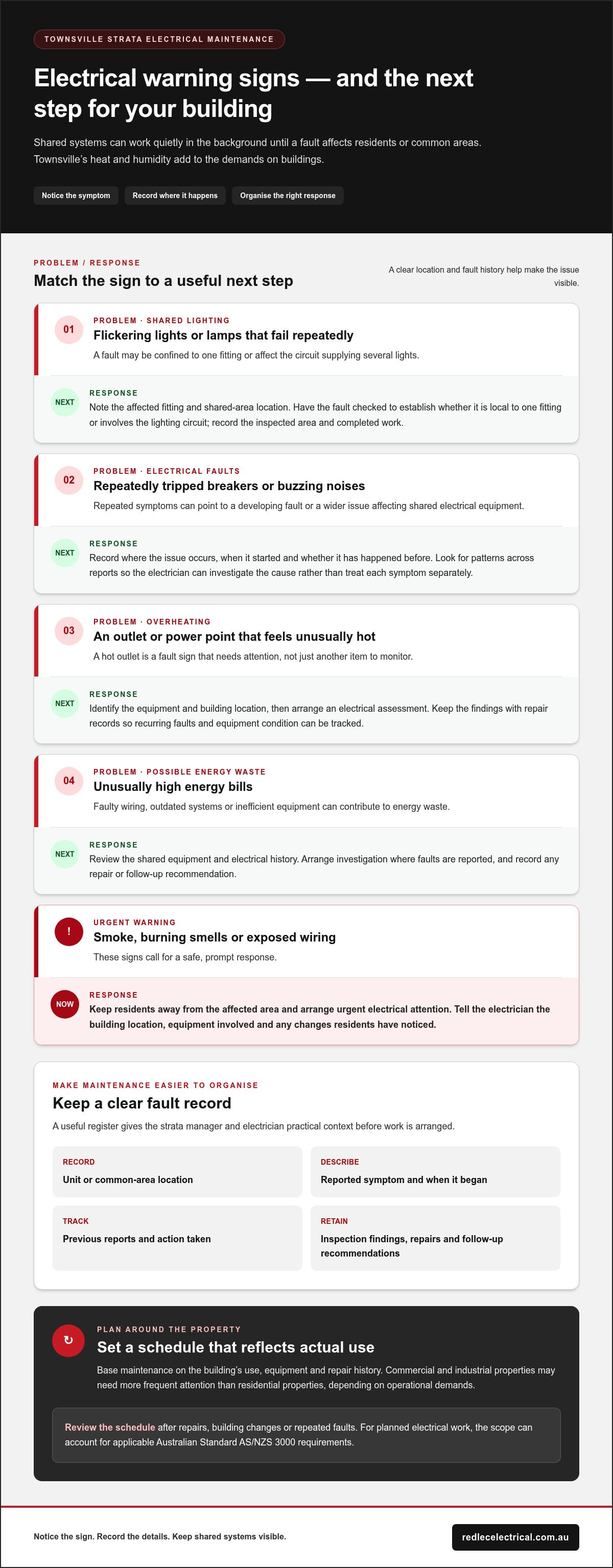
For strata electrical maintenance in Townsville, warning signs include flickering lights, repeatedly tripped breakers, buzzing noises, overheating outlets and unusually high energy bills. These issues can indicate faults that need attention. Electrical maintenance can also help reduce energy waste from faulty wiring, outdated systems or inefficient equipment.
Shared electrical systems often work quietly in the background until a fault affects residents or common areas. In North Queensland, heat and humidity add to the demands on buildings. A clear maintenance approach helps make issues visible and organise the next steps.
This article explains what electrical maintenance can cover in residential and commercial strata properties, what to look for, and how maintenance plans, compliance records and lighting upgrades fit together. It also outlines how to set a practical maintenance schedule and when to arrange professional electrical support.
Key Takeaways
- Flickering lights, tripped breakers, buzzing sounds and overheating outlets can signal that shared electrical systems need attention.
- Set maintenance schedules around the property’s use and electrical demands, with commercial sites potentially needing more frequent attention than residential buildings.
- Keep clear records of inspections, repairs and safety work, and understand which Queensland smoke alarm requirements apply to your property.
- Review common-area lighting for faults and consider whether LED upgrades could better suit corridors, car parks and other shared spaces.
- Learn how electrical services and battery storage solutions can support the needs of residential and commercial strata properties.
What does an electrical maintenance service include?
In a Townsville strata property, maintenance can cover shared lighting, electrical faults, appliances and repairs. Start by identifying the affected equipment and its location, then determine whether the issue needs urgent attention.
Lighting work may include installing fittings, replacing failed lamps, repairing damaged switches and investigating lights that flicker or fail repeatedly. In a shared corridor, for example, an electrician can check whether a fault is confined to one fitting or affects the circuit supplying several lights. Outdoor fittings also need to suit Townsville’s hot, humid conditions. A clear scope lets the strata manager record the areas inspected and the work completed.
Preventative repairs and equipment lifespan
Preventative repairs address wear or faults before they interrupt a shared service. An electrician can inspect visible damage, loose fittings and equipment that has needed repeated repairs, then recommend whether repair or replacement is appropriate. Replacing a failing light fitting, for example, can prevent recurring disruption in a stairwell. Keep inspection findings with repair records to track equipment condition and make informed maintenance decisions.
Electrical repair and replacement quotes
A useful quote should describe the fault, proposed work and whether equipment will be repaired or replaced. Ask for the affected area and fitting or appliance to be identified, rather than accepting a broad description such as “electrical work”. If repair and replacement are both options, the quote should explain what each includes. This gives the strata committee a practical basis for reviewing the scope and approving the next step.
Reactive repairs and emergency support
Reactive repairs address a fault after it appears, such as a power point that becomes unusually hot or a shared light that stops working. If you notice smoke, burning smells or exposed wiring, keep residents away from the affected area and arrange urgent electrical attention. Tell the electrician the building location, equipment involved and any changes residents have noticed. These details help identify the issue and plan a safe response.
Appliance maintenance can involve investigating equipment that stops working, checking its electrical connection and deciding whether repair or replacement is appropriate. In a shared laundry, for example, record the appliance’s location and symptoms before arranging an assessment. Clear information can help distinguish an appliance fault from a problem with its supply circuit.
For planned electrical work, the scope can also account for applicable Australian Standard AS/NZS 3000 requirements. Ask for completed work and any follow-up recommendations to be recorded. A written record helps the strata manager track outstanding repairs, recurring faults and the condition of shared electrical equipment.
Why is regular electrical maintenance important?
Regular electrical maintenance helps you identify developing faults, organise repairs and keep shared services working. In Townsville, set a practical schedule based on each building’s use, equipment and repair history.
Strata electrical maintenance in Townsville can include inspections, fault investigation, repairs and recommendations for shared areas. Commercial and industrial properties may need more frequent maintenance than residential properties, depending on operational demands. A building with regularly used equipment, such as a commercial laundry, has different needs from a small residential complex.
Look for patterns, not just individual faults. Flickering lights, tripped breakers, buzzing noises, overheating outlets and unusually high energy bills can all signal that an electrical system needs attention. Record where each issue occurs, when it started and whether it has happened before. Repeated faults in one location can help an electrician identify a wider problem instead of treating each symptom separately.
For residential strata, a schedule can group checks of common-area lighting, switchboards and shared equipment. Commercial property maintenance should also account for operating hours and the impact of an interruption on tenants or business activity. Review the schedule after repairs, building changes or repeated faults so it reflects the property’s actual demands.
Real estate agents and strata managers can make maintenance easier to organise by keeping an up-to-date fault register. Include the unit or common-area location, reported symptom, date raised and any action taken. For a rental property, clear records help distinguish a new report from a recurring issue and give the electrician useful context before attending.
Electrical maintenance can help reduce energy waste from faulty wiring, outdated systems or inefficient equipment. If a shared light flickers or a breaker trips repeatedly, prompt investigation may identify the cause before the fault affects more areas. Routine checks do not replace the need to respond when a new warning sign appears.
Reviews of Townsville strata electrical maintenance companies can describe customers’ experiences with communication, work scope and follow-up. Look for specific examples in the comments, then use clear work records to understand your property’s needs.
To arrange electrical maintenance through a Queensland body corporate, send the manager or committee a written description of the fault, its location and any previous reports. These details help organise the next step and keep the issue on the property’s maintenance record.
Quotes should explain the reported fault, proposed repair or replacement, and the work included. The scope may depend on the equipment involved, access to the affected area and whether the fault extends beyond one fitting or circuit. A clear written scope helps you compare the proposed work with the building’s needs and keep approval records together.
Maintenance plans and compliance documentation
A written maintenance plan helps you track inspections, faults, repairs and follow-up work across a Townsville strata property. Keep records clear so the committee or manager can see what was checked and what remains outstanding.
Electrical safety and regulatory compliance
For each visit, record the area inspected, the reported issue, work completed and any recommended follow-up. Keep test results and invoices with the property’s electrical records, and note whether the work relates to Australian Standard AS/NZS 3000. This creates a practical history of workmanship and repairs. If an issue remains unresolved, list its location and the next action, so it isn’t lost between meetings.
Strata maintenance contract options
Smoke alarm records need their own clear process. From January 2022, Queensland smoke alarm requirements described for homes or units apply when they are sold or leased, and when existing leases are renewed. The requirements described specify photoelectric alarms complying with AS3786-2014, with an alarm on each storey of the dwelling. They also require alarms to be interconnected so all activate together.
For dwellings covered by those requirements, non-removable smoke alarms with a 10-year battery can be installed. Record each alarm’s location, type and inspection or replacement work in the property file. For a unit building, distinguish alarms inside individual dwellings from equipment in common areas. That makes it easier to see which records relate to the dwelling and which relate to shared property.
Consider Townsville strata electrical maintenance rebates or compliance programs separately from the maintenance record. Keep the plan focused on the work, inspection outcomes and relevant compliance evidence. Record a program or rebate separately when it applies to the property and work being undertaken.
Use a simple register with fields for the date, location, finding, action taken and follow-up status. After a switchboard inspection, for example, file the electrician’s findings with any repair documentation and note outstanding recommendations. At committee reviews, use the register to prioritise open issues and schedule the next planned visit. Consistent records help managers, owners and contractors work from the same history.
Common-area lighting and LED retrofits
Shared lighting affects how residents move through Townsville strata buildings every day. A planned review can identify failed fittings, uneven light and opportunities to upgrade common areas to LED lighting.
Start with a walk-through of the property, noting each fitting’s location and condition. Check entranceways, stairwells, corridors, car parks and bin rooms separately. A fitting that works in a corridor, for example, may still leave a stair landing poorly lit. Record flickering, dark patches, damaged covers and switches that do not work as expected. A location-based list helps the committee set priorities and track completed work.
Before changing fittings, identify what is installed and how each area is used. A ceiling fitting in an enclosed corridor has different needs from a wall light exposed to outdoor conditions. In North Queensland, heat, humidity and wind-driven rain can affect outdoor areas, so note whether fittings are sheltered or exposed. This helps an electrician assess suitable replacements for each setting.
For an LED retrofit, a practical sequence is:
- List existing fittings by building area and note any recurring faults.
- Identify the areas residents use most, such as entrances and stairwells.
- Ask for the proposed fittings and work scope to be described clearly.
- Record completed replacements and any remaining repairs by location.
LED lighting can use less electricity than older lighting types, but the result depends on what is being replaced and how the lights are used. A corridor light left on for long periods presents a different opportunity from a fitting used briefly in a storage room. Consider usage patterns and the condition of existing equipment rather than choosing replacements by appearance alone.
Consistent lighting matters across a route. If one fitting in a stairwell is much brighter or a different colour from nearby lights, the space can feel uneven. Ask that the proposed fitting’s light output and colour appearance be considered across the whole area. This helps avoid replacing one unit without considering the surrounding fittings.
Plan installation access around residents and building operations. A car park retrofit, for example, may need to be organised around vehicle movement. Mark affected areas, communicate the work schedule and record which fittings are temporarily unavailable. After installation, inspect each location and note any faults that need follow-up.
Keep the lighting register with the strata property’s maintenance records. Include the area, fitting type, installation or repair date and any outstanding issue. If another corridor fitting fails, this history helps identify recurring trouble spots and supports organised decisions about future upgrades.
Residential and commercial strata services
Residential and commercial strata properties share electrical infrastructure, but their daily demands differ. A residential complex may prioritise apartment access and shared areas, while a commercial site must also consider operating hours and equipment used by tenants.
Start by mapping the property’s electrical areas. Separate individual dwellings from common property such as foyers, stairwells, car parks, plant rooms and shared laundries. In a mixed-use building, record commercial tenancies separately from residential units. This helps the strata manager direct reports to the right location and identify areas for inspection or repair.
Residential maintenance often focuses on shared lighting, smoke alarms in covered dwellings, switchboards and reported faults affecting residents. For example, record the location of a flickering corridor light so the electrician can find the fitting and assess the relevant circuit. Keep reports from individual residents separate from common-property issues, then pass the details to the body corporate manager.
Commercial strata adds considerations such as business hours, tenant access and equipment interruptions. A fault in a shopfront or shared office area may affect staff, customers or trading activity. Include the tenancy, affected equipment and suitable access arrangements in the work request. If a fault affects an operating business, communicate the planned work and any area restrictions to the relevant tenant.
Townsville’s heat, humidity and seasonal weather also make location useful context. An outdoor fitting exposed to rain and moisture differs from a dry, internal switchboard. Note whether an electrical issue is inside, under cover or exposed to the elements. This helps the electrician assess site conditions and plan the inspection or repair.
For properties combining residential and commercial spaces, use one register with clear area labels. For example, list “residential stairwell” separately from “ground-floor retail tenancy”. Add the reported symptom, access details, action taken and any follow-up needed. This structure reduces confusion when a committee reviews several reports or organises work across different parts of the building.
When planning work, identify who can provide access to locked rooms, tenancies and shared facilities. The strata manager can coordinate keys and resident notices, while commercial tenants can advise when work may disrupt their operations. Clear arrangements help the electrician reach the affected equipment and understand the work area.
For a mixed-use building, group related work where access and location allow. For example, plan an inspection of shared lighting alongside a reported fault in the same corridor. Keep unrelated tenancy issues separate in the work record so approvals and follow-up remain clear.
If you need an electrical assessment for shared residential or commercial areas, arrange strata electrical support for the property’s specific requirements.
Redlec Energy Solutions: Battery Storage Systems
Redlec Energy Solutions can help your strata property consider Battery Storage Systems alongside its electrical needs. Its Solar Battery Installation and Solar Power Systems may suit a property reviewing how it generates and stores electricity. The right setup depends on the building’s existing electrical system, energy use and project requirements, so clarify the intended use before planning an installation.
For faults and ongoing electrical work, Redlec Energy Solutions also provides Electrical Services. This can be a practical next step when maintenance findings point to repairs or the committee is assessing an electrical upgrade alongside battery storage. Keep the property’s inspection notes and proposed work scope handy to explain the building’s needs.
Contact Redlec Energy Solutions to discuss your strata property’s electrical or battery storage requirements.
Set a clear next step for your strata property
Effective strata electrical maintenance in Townsville starts with agreement on priorities, access and responsibility. At your next committee meeting, decide who will coordinate electrical work and keep decisions moving. A named contact helps residents, managers and contractors share updates clearly.
Turn the property’s current needs into a short action list. Separate urgent faults from planned improvements, assign someone to each follow-up and set a date to review progress. For a mixed-use building, include residential and commercial representatives when work may affect their areas. This gives your committee a workable path from reported issue to completed action.
When you’re ready to discuss electrical or energy projects for your property, speak with Redlec Energy Solutions. A clear starting point can help you make confident decisions and keep your strata property moving forward.
Frequently Asked Questions
What are signs that my electrical system needs maintenance?
Changes from normal operation, recurring equipment faults and unusual sounds can signal a problem. Note the affected area, when the issue occurs and whether other residents report the same problem. If several units report a power interruption, for example, record each location rather than treating the reports as unrelated. Share the details with the property manager so the issue can be assessed in the context of the building.
What should a strata maintenance request include?
A useful request identifies the affected building area, equipment and access arrangements. Include whether the issue affects a lot, shared space or commercial tenancy, when it occurs and any visible changes. This gives the committee a clear basis to assign the request, arrange access and keep updates tied to the right property record. For example, name the specific stairwell rather than simply reporting a common-area fault.
What electrical maintenance is the body corporate responsible for in Queensland?
Responsibility depends on whether the electrical equipment serves common property or an individual lot, and on the scheme’s arrangements. A shared corridor fitting and one inside a private unit may therefore need different reporting and approval pathways. Check the property plan and body corporate records to identify the area, then give the manager the fault’s location and description. This helps route the report to the appropriate decision-maker.
What are the Queensland electrical safety requirements for strata properties?
Electrical work should be assessed against the applicable safety requirements, including Australian Standard AS/NZS 3000. Queensland smoke alarm requirements described for homes or units apply from January 2022 when sold or leased, and when existing leases are renewed. They specify photoelectric alarms complying with AS3786-2014, an alarm on each storey, and interconnection so all activate together. Non-removable alarms with a 10-year battery can be installed in covered dwellings.
How often should strata common-area electrical systems be inspected?
Set inspection timing according to the building’s use, equipment and fault history instead of applying the same schedule to every site. Commercial or industrial properties may need more frequent maintenance than residential properties, depending on operational demands. A shared facility with regularly used electrical equipment, for example, may need a different plan from a low-use residential common area. Review the schedule when building use changes or recurring issues emerge.
What are the risks of deferred electrical maintenance in strata buildings?
Delaying attention can leave recurring faults unresolved, disrupt shared facilities and make it harder to track a problem’s history. A fault in a common corridor, for example, may inconvenience residents and complicate access while repairs remain outstanding. Faulty wiring, outdated systems or inefficient equipment can also contribute to energy waste. Record new reports promptly and follow their progress through assessment, approval and completed work.
Are there Townsville strata electrical maintenance rebates or compliance programs?
Compliance records can include inspections, repairs and follow-up work; Queensland smoke alarm requirements described apply to homes or units sold or leased, and when existing leases are renewed. Covered dwellings need interconnected photoelectric alarms complying with AS3786-2014, with an alarm on each storey.
How do I choose between Townsville strata electrical maintenance companies and reviews?
Reviews can offer examples of customers’ experiences with communication, work scope and follow-up. Look for specific examples in comments, and keep clear work records to understand your property’s needs when partnering with specialists like Redlec Energy Solutions.