Did you know that the risk of dying in a house fire is up to 60% higher if you don’t have a working smoke alarm? It’s a sobering thought for any Australian family. Most of us only think about these devices when they start chirping at 2 AM or when the burnt toast sets them off. However, knowing exactly when to replace smoke alarms australia wide is about more than just stopping an annoying noise; it’s a critical safety task and a legal necessity. With the National Construction Code adopting the new AS 3786:2023 standards in 2026, keeping your home compliant is now a top priority for every property owner.
We know that trying to understand the difference between hardwired and battery units or worrying about the 2027 Queensland deadline can be stressful. You deserve the peace of mind that comes from knowing your home is secure and your family is protected. This guide will show you how to check your alarm’s expiry date, explain the mandatory 10-year replacement rule, and clarify the latest state-specific requirements. We’ll provide the clear, expert advice you need to choose the right photoelectric alarms and ensure your household is fully compliant without any unnecessary guesswork.
Key Takeaways
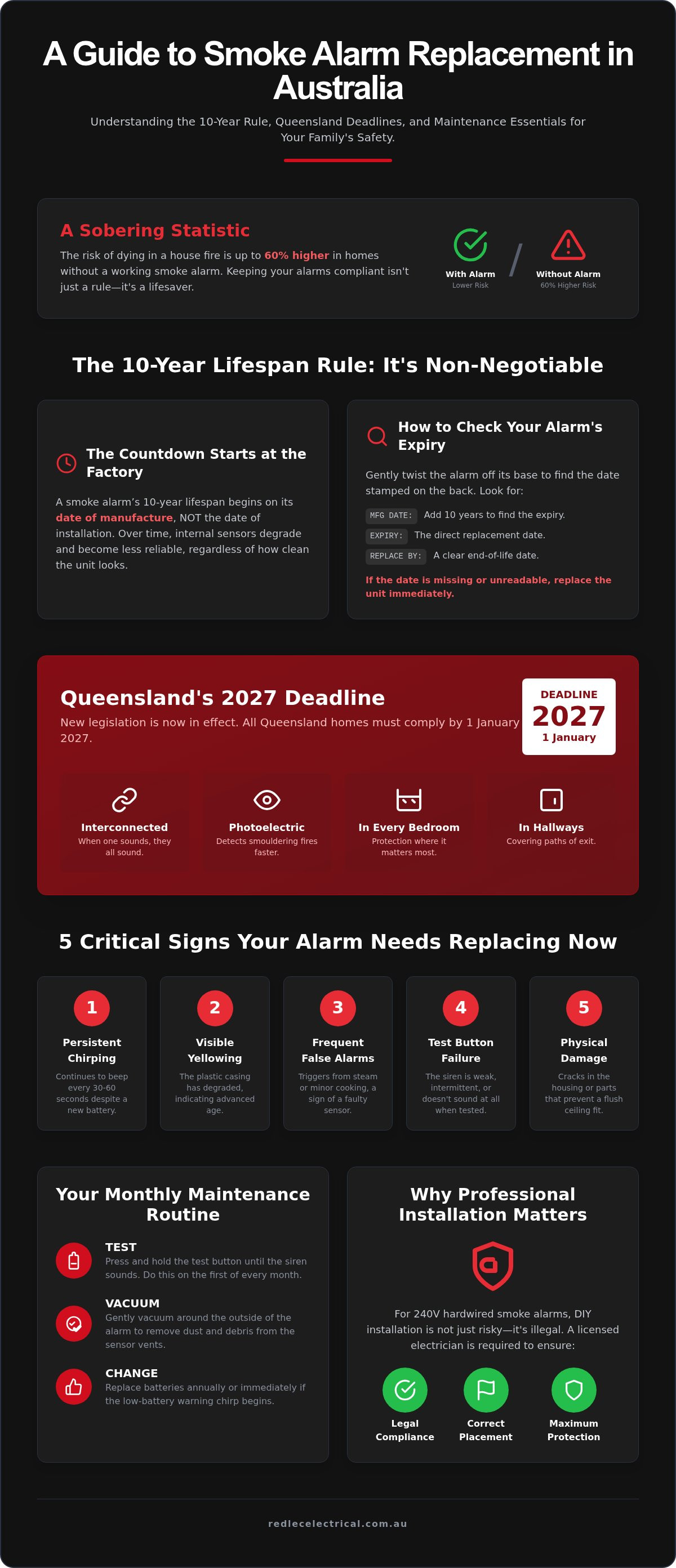
- Every smoke alarm in Australia has a strict 10-year lifespan that begins on the date of manufacture, regardless of when it was actually installed in your home.
- You can identify exactly when to replace smoke alarms australia wide by looking for the expiry or manufacture date stamped on the back of the device.
- Queensland residents need to act now to meet the 1 January 2027 deadline, which requires interconnected photoelectric alarms in every bedroom and hallway.
- Regular maintenance is vital; using the “Test, Vacuum, Change” method on the first of every month helps your alarms remain reliable for their full decade of service.
- For hardwired 240V systems, you must use a licensed electrician to ensure the installation is legally compliant and provides the best possible early warning protection.
The 10-Year Rule: Why Smoke Alarms Have an Expiry Date
Every smoke alarm in your home is a precision instrument designed to save lives. However, like any piece of technology, it doesn’t last forever. Australian safety standards are very clear: every unit must be replaced at least every decade. If you are wondering when to replace smoke alarms australia wide, the answer is always tied to the device’s internal health rather than just the battery life.
The sensors inside these units are incredibly sensitive. Over time, the components that detect smoke particles begin to fail. Whether it’s the radioactive source in older ionisation models or the light-sensing chamber in modern photoelectric versions, smoke detector technology degrades naturally. Cleaning the exterior of an old alarm might make it look new, but it cannot restore the sensitivity of a worn-out internal sensor. This is why the Australian Standard AS 3786:2014 remains the non-negotiable benchmark for all new replacements.
The Science of Sensor Decay
Inside the sensing chamber, a decade’s worth of dust, microscopic debris, and even tiny insects can accumulate. This build-up creates a physical barrier that prevents smoke from reaching the sensor quickly. In a real fire, this leads to late activation. For a smouldering house fire, every second counts. This is a major reason why many Australian states are phasing out ionisation alarms; they are often too slow to react to the types of fires most common in modern homes, where synthetic materials burn differently than traditional timber.
Manufacturing Date vs. Installation Date
A common mistake homeowners make is thinking the 10-year clock starts when they buy the alarm or move into the house. It actually starts on the day the unit was made. You can usually find a manufacture date or an expiry date stamped on the back of the unit. You’ll need to gently twist the alarm off its mounting base to see it. Check for these specific markings:
- MFG DATE: The date the unit was manufactured. Add 10 years to this to find your deadline.
- EXPIRY: The date the manufacturer recommends the unit be retired.
- REPLACE BY: A clear date indicating the end of the unit’s reliable service life.
If the stamp is missing or you can’t read it, play it safe and assume the unit has already expired. It’s a small price to pay for your family’s safety. To make things easier for the future, we recommend writing the installation date on the side of the unit with a permanent marker or keeping a simple logbook in your electrical cupboard. Knowing exactly when to replace smoke alarms australia becomes much simpler when you have your own records to check.
5 Critical Signs Your Smoke Alarm Needs Replacing Now
While the calendar is your best guide for knowing when to replace smoke alarms australia wide, your devices often give off physical warning signs before they reach the decade mark. Ignoring these signals doesn’t just lead to annoying midnight wake up calls; it puts your household at risk. If your alarm is showing any of the following symptoms, it’s time to retire the unit immediately.
- Persistent chirping: If the unit continues to beep every 30 to 60 seconds even after you’ve installed a brand new, high quality battery.
- Visible yellowing: A casing that has turned yellow indicates that the plastic has degraded due to UV exposure or heat, suggesting the internal components are likely just as aged.
- Frequent false alarms: Units that trigger when you’re simply boiling the kettle or taking a shower are often suffering from overly sensitive, contaminated sensors.
- Test button failure: If you press the “test” button and the siren is weak, intermittent, or doesn’t sound at all.
- Physical damage: Any cracks in the housing or loose components that prevent the unit from sitting flush against the ceiling.
This is especially important to monitor given Queensland’s 2027 interconnection deadline, as older, faulty units cannot be reliably integrated into the new required systems. If your alarms are acting up, our team at Redlec can help with professional electrical services to get your home safety back on track.
The “Chirp” of Death: Troubleshooting Persistent Noises
It’s a common frustration: you’ve swapped the battery, but the chirping won’t stop. This usually signals an internal fault rather than a power issue. Inside the alarm, a component called a capacitor helps manage electrical flow. When this fails, the unit can no longer monitor its own health correctly, leading to random activations at 3 AM. Never simply “unplug” a nuisance alarm and leave it. A disabled alarm is the same as having no alarm at all. If the chirping persists after a battery change, the internal circuitry is likely compromised, and the entire unit must be replaced.
Environmental Factors in North Queensland
Living in Townsville presents unique challenges for fire safety equipment. Our high humidity can cause moisture to settle on the electronic circuit boards, leading to “phantom” alarms or short circuits. Coastal salt air is another culprit; it can corrode battery terminals and sensor contacts much faster than in inland areas. We also see many issues with tiny insects, like thunderbugs, crawling into the sensing chambers of older units. These pests can block the light sensor in photoelectric alarms, causing them to fail when you need them most. In our tropical climate, these environmental stresses often mean you’ll be looking at when to replace smoke alarms australia sooner than the standard 10-year recommendation.
Queensland Legislation: The 2027 Interconnection Deadline
For homeowners in the Sunshine State, the countdown is on. By 1 January 2027, every existing private dwelling in Queensland must be fitted with interconnected photoelectric smoke alarms. This isn’t just a recommendation; it’s a legal mandate designed to provide the earliest possible warning during a fire. While the 10-year rule dictates when to replace smoke alarms australia wide, Queensland’s specific laws add another layer of urgency for local residents.
The core of this legislation is “interconnection.” This means if a fire starts in the kitchen, every alarm in the house will sound simultaneously. In larger, multi-level homes, this feature is a lifesaver. You no longer have to wait for smoke to reach your bedroom door to be alerted to a danger elsewhere in the house. The law also shifts exclusively to photoelectric technology, which is far more effective at detecting smouldering fires than the older ionisation models. It’s important to note that if you’re currently renting out a property or putting your home on the market, these rules likely already apply to you, as the deadline for dwellings being sold or leased passed in January 2022.
What Does “Compliant” Actually Look Like?
To meet the Australian Standards for smoke alarms, your new system must be either hardwired to the 240V mains power or powered by a non-removable 10-year lithium battery. The placement is just as critical as the technology. You must have alarms installed in every bedroom, in the hallways connecting bedrooms, and on every level of the home. Each unit must carry the AS 3786:2014 certification mark to be considered legal. This ensures that the device has been tested to withstand the rigours of the Australian climate and will perform exactly when needed.
The Legal Risks of Non-Compliance
Failing to upgrade by the deadline carries significant risks that go beyond a simple fine. Your home insurance policy may be at stake. Many insurers require you to comply with all local building and safety regulations; if a fire occurs and your alarms aren’t compliant, your payout could be reduced or denied entirely. For landlords, the pressure is even higher. Non-compliant rental properties can result in heavy fines and significant legal liability if a tenant is injured.
If you’re planning to sell your Townsville property, you’ll need a compliance certificate to prove the installation meets current standards before the deal can close. It’s best to act early rather than rushing at the last minute when contractors are fully booked. Want to know more about Queensland Smoke Alarm Legislation: Is Your Home Legal? Our team can assess your current setup and ensure you’re fully protected well before the 2027 cutoff. Knowing exactly when to replace smoke alarms australia involves staying ahead of these state-specific dates to keep your family and your investment safe.
Maintenance Routine: How to Make Your Alarms Last 10 Years
Installing a new alarm is only half the battle. To ensure your devices actually reach their full decade of service, you need a consistent maintenance routine. Most homeowners wait for a chirp to remind them about their alarms, but proactive care is what truly keeps your family safe. In Australia, fire safety experts recommend the “Test, Vacuum, Change” methodology. By following this simple three step process, you can be certain your equipment is ready to perform and you won’t be left guessing about when to replace smoke alarms australia wide.
The best way to stay on top of this is to tie the routine to a date you won’t forget. We suggest using the first day of every month as your memory aid. It only takes a few minutes to walk through your home and check each unit. Consistent care prevents the build up of dust and debris that often leads to those frustrating false alarms in the middle of the night.
Monthly Testing and Cleaning
Testing your alarm is a straightforward task that provides immediate peace of mind. Simply press and hold the test button until the siren sounds. If you’re unsure of the process, you can follow our detailed guide on how to test smoke alarms for a clear walkthrough. Once you’ve confirmed the siren works, it’s time to clean. Use the soft brush attachment on your vacuum cleaner to gently remove cobwebs and dust from around the vents. For units on high ceilings that are hard to reach with a vacuum, a can of compressed air duster is an excellent alternative to blow out any trapped particles without needing a ladder.
Battery Replacement Guide
While the industry is moving toward “sealed” units, many Australian homes still have alarms that require an annual battery swap. If your alarm has a removable battery, you should change the 9V cell every year, even if the unit isn’t chirping yet. However, modern photoelectric alarms often come with sealed 10 year lithium batteries. These units are designed so you never have to touch the battery for the entire life of the alarm. Once the battery dies, the whole unit has reached its expiry and must be replaced.
A critical safety warning for any DIY enthusiast: never paint over a smoke alarm or its vents. Even a thin layer of paint can seal the sensing chamber, making the device completely useless in a fire. If you are renovating, cover the alarms with a plastic bag and remove it immediately once the work is finished. For those who want to ensure their system is perfectly maintained and compliant, booking professional smoke alarm maintenance with a licensed electrician is the most reliable way to stay ahead of the curve. By staying diligent with these small tasks, you’ll know exactly when to replace smoke alarms australia because you’ll be monitoring their health every single month.
Professional Installation: Why DIY Isn’t Always the Answer
While sticking a battery powered unit to the ceiling might seem like a simple Saturday morning task, modern fire safety is far more technical than it used to be. For many homeowners, determining exactly when to replace smoke alarms australia wide involves more than just a date check; it requires ensuring the system meets the latest electrical standards. In Australia, if your home requires 240V hardwired alarms, you are legally required to use a licensed electrician. This isn’t just a safety recommendation; it’s a matter of compliance that protects your property and your insurance coverage.
By choosing a professional service, you’ll gain total clarity on when to replace smoke alarms australia wide and rest easy knowing the job was done properly. Professionals bring a level of expertise that goes beyond simply mounting a device. We understand the physics of fire and smoke. We ensure alarms aren’t placed in “dead air” spaces, such as tight corners or the very peak of a cathedral ceiling, where smoke particles might not reach the sensor in time.
Hardwired vs. Wireless Interconnection
Hardwired units are incredibly reliable as they draw power directly from your home’s electrical system. However, for multi-storey Townsville homes where running new cables through walls is difficult, wireless RF (Radio Frequency) interconnection is a brilliant alternative. Redlec can create a “safety net” across your entire property by linking these units wirelessly. When one unit detects trouble, they all sound, giving you the best possible chance to evacuate safely. This professional placement avoids the common pitfalls of DIY setups, ensuring that the signal strength between alarms is robust and that every bedroom is covered.
Booking Your Townsville Safety Audit
When a Redlec electrician visits your home, we don’t just swap out old units. We perform a comprehensive safety audit to ensure your entire system is up to scratch for the 2027 deadline. Our team takes personal pride in the safety of our Townsville neighbours. We know the local building styles, from high-set Queenslanders to modern masonry blocks, and we know exactly how smoke behaves in these environments. During an audit, we check the age, placement, and interconnection of every alarm.
Many of our customers find it convenient to bundle these checks with other essential maintenance, such as switchboard upgrades, to ensure their home’s electrical heart is just as safe as their smoke detection. We provide a steady hand and expert advice, making the transition to a compliant system smooth and stress free. Ensure your home is 2027 compliant—contact Redlec for a smoke alarm audit today.
Protect Your Family with a Compliant Home
Understanding when to replace smoke alarms australia wide is the first step toward a safer household. Whether your devices have hit the ten year mark or you’re preparing for the mandatory 2027 Queensland interconnection laws, acting early is always the best strategy. A working alarm is your family’s best defence against house fires, providing the vital seconds needed for a safe evacuation.
Don’t let the technical details of hardwiring or sensor types cause unnecessary stress. Our team of licensed Townsville electricians has expert knowledge of QLD 2027 fire safety laws. We provide comprehensive residential electrical safety audits to ensure your property is fully protected and legally compliant, giving you the peace of mind you deserve.
Book your Townsville smoke alarm compliance check with Redlec Energy Solutions today. We take pride in keeping our community safe, one home at a time.
Frequently Asked Questions
Do I really need to replace my smoke alarm if it still works when I press the button?
Yes, you must replace your unit every ten years regardless of whether the test button works. This button only confirms that the battery, electronic circuitry, and siren are functioning. It doesn’t tell you if the internal sensor is still sensitive enough to detect smoke particles. Over a decade, the sensor naturally loses its effectiveness. Knowing exactly when to replace smoke alarms australia wide ensures you aren’t relying on a device that sounds fine but can’t actually “see” a fire.
Can I replace a hardwired smoke alarm myself in Queensland?
No, you cannot legally replace or install a hardwired smoke alarm yourself. In Queensland, any work involving 240V mains power must be carried out by a licensed electrician. Attempting this as a DIY project is not only dangerous but can also void your home insurance and lead to significant fines. For battery-only units, you can handle the mounting yourself, but hardwired systems require a professional touch to ensure they are safely integrated into your home’s electrical heart.
What is the difference between ionisation and photoelectric smoke alarms?
The primary difference lies in how they “see” smoke. Ionisation alarms use a small amount of radioactive material to detect invisible particles from fast-flaming fires. Photoelectric alarms use a light source and sensor to detect larger particles from slow-smouldering fires, which are the most common in Australian homes. Because photoelectric units provide a much earlier warning for smouldering fires and are less prone to false cooking alarms, they are now the mandatory standard for new installations.
Why does my smoke alarm go off when I have a shower or cook toast?
Most modern alarms use photoelectric technology, which relies on a light beam inside a sensing chamber. When steam from your shower or particles from burnt toast enter that chamber, they scatter the light beam just like smoke does, triggering the siren. This is a common annoyance in humid Townsville homes. If this happens frequently, it might be a sign your alarm is poorly positioned or has a build-up of dust that needs a quick vacuum.
How many smoke alarms do I need for a standard three-bedroom house?
For a standard three-bedroom home in Queensland, you’ll typically need at least five interconnected alarms. The 2027 legislation requires one alarm in every bedroom, plus one in the hallway that connects those bedrooms. If your home has multiple levels, you must also have at least one alarm on each storey. Ensuring you have the right number of units is a key part of understanding when to replace smoke alarms australia and staying fully compliant with the law.
What happens if I don’t meet the 2027 smoke alarm deadline?
Missing the 1 January 2027 deadline can lead to several serious consequences. You may face on-the-spot fines from authorities, but the bigger risks are financial and legal. Landlords can be held liable for tenant injuries in non-compliant properties, and many insurance companies may refuse to pay out a claim if your home doesn’t meet current safety standards. It’s much safer to organise your upgrade early to avoid the last-minute rush and ensure your family is protected.
Do 10-year lithium battery smoke alarms really last for a full decade?
These units are specifically engineered to provide power for the entire 10-year life of the smoke sensor. This eliminates the need for annual battery changes and stops that annoying low-battery chirp. While they are very reliable, extreme environmental conditions like the intense North Queensland heat can occasionally impact battery chemistry. It’s still vital to test these units monthly to confirm they are active, even though you won’t need to swap out a 9V battery every year.
Should I install smoke alarms in my kitchen or garage?
You should generally avoid installing smoke alarms directly in kitchens or garages. These areas are prone to “nuisance trips” from cooking fumes, steam, or vehicle exhaust. Instead, these spaces are better suited for heat alarms, which trigger based on temperature spikes rather than smoke particles. For maximum safety, place smoke alarms just outside the kitchen area or in the hallways leading to the garage to ensure you get an early warning without the constant false alarms.