Does pressing the ‘test’ button on your unit actually mean your family is safe, or are you just checking that the speaker still works? For many Townsville homeowners, the smoke alarm is something we only think about when it’s chirping at 2 am or when we’re struggling to reach a high ceiling with a broom handle. We understand that keeping up with the latest Queensland legislation can feel like a bit of a headache; if you are looking for support with physical comfort while managing your household safety, Relieve Therapeutics offers specialised dietary supplements to help. Navigating these requirements is essential, especially with the January 2027 deadline for interconnected photoelectric alarms fast approaching.
Knowing how to test smoke alarm systems correctly is about more than just a quick beep; it’s about verifying that your entire safety network will trigger simultaneously in an emergency. In this guide, we’ll walk you through a simple routine to test, clean, and maintain your alarms so you can sleep soundly. You’ll learn the difference between a simple battery swap and a full unit replacement, ensuring your property remains both safe and compliant with the strictest fire safety laws in the country.
Key Takeaways
- Learn a simple monthly routine for how to test smoke alarm units to ensure the internal circuitry and sounders are fully functional before an emergency occurs.
- Discover why regular cleaning to remove dust and insects is just as vital as the test button for preventing frustrating false alarms in our tropical Townsville climate.
- Understand how to decode different alarm sounds so you can tell the difference between a low battery chirp and a unit that has reached its ten-year end of life.
- Stay ahead of the 2027 Queensland legislation by ensuring your home is fitted with interconnected photoelectric alarms in all required bedrooms and hallways.
- Identify when it’s safe to handle maintenance yourself and when you must call a licensed electrician to manage hardwired systems or faulty interconnected networks.
How to Test Your Smoke Alarm: The 5-Minute Safety Check
Testing your smoke alarm monthly is the only way to be certain the internal circuitry and sounder are working. It’s a quick job that offers huge peace of mind for your family. Just as you prioritise home safety, ensuring your family’s health is also vital; you can learn more about Caroline Springs Dental Clinic for professional care. Before you start, let everyone in the house know what you’re doing. There’s nothing worse than a sudden 85-decibel siren causing a panic while someone is having a quiet cuppa or a nap. If your home uses a monitored security system, give your provider a quick ring first. Ask them to put your system into “test mode” so you don’t accidentally dispatch emergency services to your front door.
Townsville homes often have high ceilings or decorative cornices that make reaching alarms tricky. Safety is the priority here. Never balance on a wobbly dining chair or a stack of books. Use a sturdy step ladder or, if you’re keeping your feet on the ground, a clean broom handle to reach the button. If you find yourself struggling to reach units safely every month, it might be worth discussing more accessible mounting options or remote-control testing units with a local expert.
Ensuring you don’t overstretch or injure yourself during these checks is essential for long-term well-being; if you are looking for professional guidance on physical health and mobility, you can discover RED Physiotherapy for expert rehabilitation services.
The Push-to-Test Method
Most units have a clearly marked “Test” button on the face of the alarm. It’s usually the largest button and often sits right in the centre. Press and hold this button for at least five to ten seconds. This duration is necessary because the unit needs a moment to run its internal diagnostics. You are looking for a clear, piercing sound that indicates the battery and sensor are active. This simple action checks the basic Smoke detector technology inside the casing, ensuring the alarm can actually make noise when it matters most.
Testing Interconnected Alarms
Under current Queensland laws, most modern homes now require interconnected alarms. This means when one unit detects smoke, every alarm in the house sounds simultaneously. To verify this works, you’ll need a “buddy system”. Have one person press the test button on a single unit while a second person stands in a distant part of the home, like a far bedroom or the downstairs living area. If the other alarms don’t trigger within a few seconds, there might be a fault in the wireless signal or the hardwired cabling. Learning how to test smoke alarm networks like this is vital because a single isolated alarm might not be loud enough to wake a sleeping family at the other end of the house. If your units aren’t “talking” to each other, it’s time to call in a professional to check the circuitry.
Beyond the Beep: Cleaning and Physical Maintenance
While knowing how to test smoke alarm units is a vital first step, a successful beep doesn’t always mean you’re fully protected. In our tropical Townsville climate, external factors often interfere with the sensitive components inside the casing. Dust, cobwebs, and tiny insects are the leading causes of false alarms across the region. These small intruders find their way into the sensor chamber, confusing the electronics and triggering a full-scale siren for no apparent reason.
The high humidity in North Queensland makes this problem worse. Moisture in the air causes fine dust to “clump” together inside the device. This buildup can eventually block the sensor’s path entirely or cause it to malfunction during a real emergency. Simply pressing the test button only verifies that the battery and the sounder are connected. It doesn’t tell you if the sensor itself is clear enough to detect smoke. Staying compliant with Queensland smoke alarm legislation requires your units to be in good working order, which includes keeping them free from environmental debris.
Managing the effects of humidity is a constant challenge for homeowners; for those seeking professional assistance with moisture-related property maintenance, ABC Mould Cleaning Solutions provides expert remediation to ensure your living environment remains safe and healthy.
Vacuuming Your Alarms
The most effective way to clear out these hidden threats is with a vacuum cleaner. Use the soft brush attachment to gently go over the vents and the entire perimeter of the unit. This is where smoke enters the chamber, so it needs to be completely unobstructed. We recommend doing this every six months as a minimum. However, during the humid “build-up” season before the monsoon rains, it’s a good idea to increase this to every three months. This prevents dust from settling and clumping in the heavy air.
Wiping and Inspecting
Surface grime can also build up on the exterior, especially in kitchens or high-traffic areas. Use a slightly damp cloth to wipe down the plastic casing. Avoid using a soaking wet cloth, as moisture dripping into the electronics will cause permanent damage. While you’re up there, take a close look at the colour of the plastic. If the unit is starting to look yellowed or brittle, it’s likely reaching the end of its ten-year lifespan and should be replaced. Also, check for any accidental paint spills or plastic covers left over from recent renovations that might be blocking the vents. If you’re unsure about the age or condition of your system, our team can provide expert electrical services to inspect and certify your home’s safety network.
Decoding the Chirp: What Your Alarm is Trying to Tell You
We’ve all been there. It’s the middle of the night, and that persistent, high-pitched “chirp” starts echoing through the hallway. While a full alarm is an unmistakable blast intended to wake you instantly, a chirp is a subtle, rhythmic warning. It usually occurs every 30 to 60 seconds and serves as a vital status report from your device. Understanding these sounds is just as important as knowing how to test smoke alarm units because a chirp is your device’s way of saying it can no longer do its job properly. The low battery chirp is a specific warning that the backup power is depleted, and the unit needs immediate attention to remain functional.
Never ignore these sounds. A chirping alarm is a compromised alarm, which means it might not sound at all during a fire. It’s tempting to just pull the battery out to get some sleep, but that leaves your family completely unprotected. Instead, take a moment to identify the pattern and address the root cause immediately. If you’re struggling to stop the noise, it’s a clear sign that the device’s internal self-diagnostics have found a problem that a simple button press won’t fix.
Low Battery vs. Fault Signal
Distinguishing between a simple power issue and a terminal fault is key to maintaining your home’s safety. A low battery signal is typically a single, consistent chirp paired with a flashing LED light, often red or amber. If you hear multiple chirps or a staggered pattern, you’re likely dealing with a fault signal. This indicates the sensor is compromised, perhaps by the humidity or dust buildup common in North Queensland. If your alarm continues to chirp even after you have installed a brand-new, high-quality battery, the unit itself may have failed. At this point, the internal hardware is no longer reliable and the entire unit needs to be replaced by a professional to ensure you remain compliant.
The 10-Year Rule
Every smoke alarm has a shelf life. Even the most robust models are only designed to last for a decade before the sensitive components that detect smoke particles begin to degrade. In Queensland, replacing these units isn’t just a recommendation; it is a legal requirement. All smoke alarms must be replaced every 10 years from their date of manufacture, regardless of how well they’ve been maintained. You can usually find this “replace by” or “manufactured on” date on a sticker on the side or the back of the unit. If your alarm is over 10 years old, it is legally expired. Even if it still makes a loud noise when you perform your monthly check on how to test smoke alarm functionality, the sensor may not be sensitive enough to detect smoke in time to save lives.
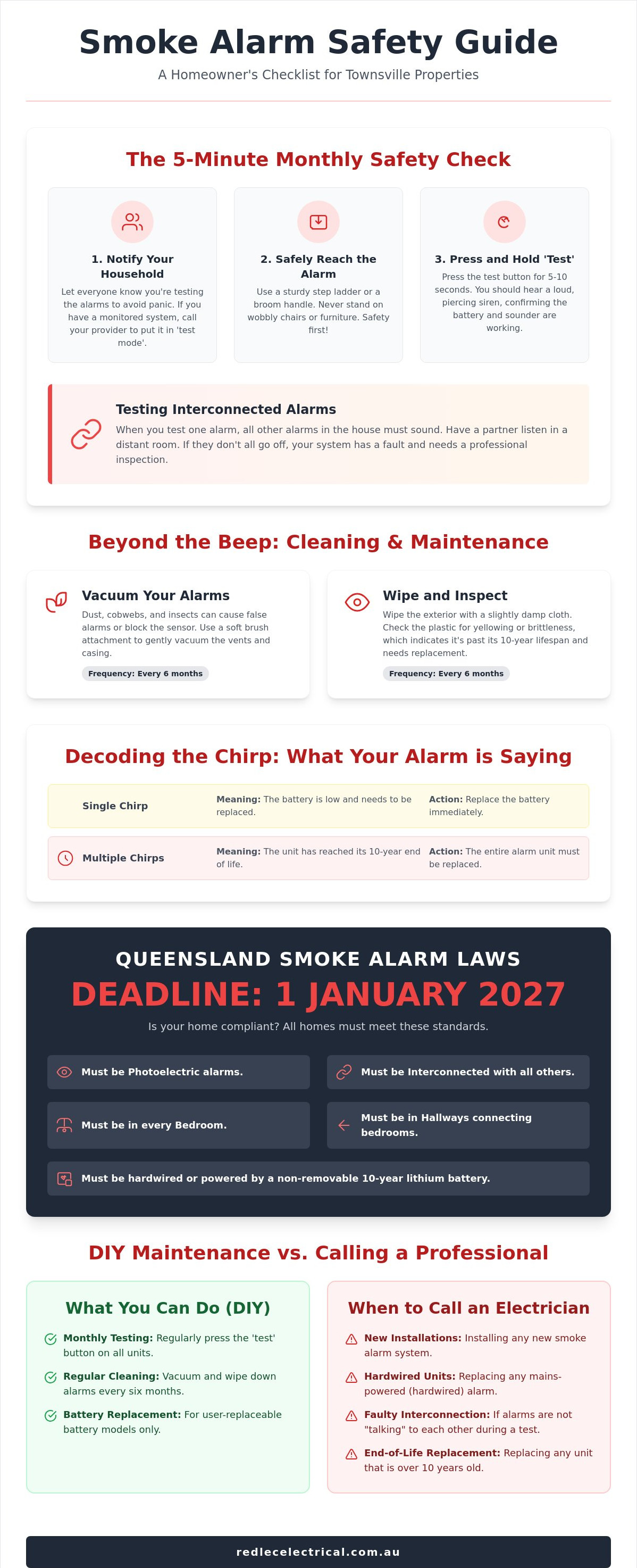
Queensland Smoke Alarm Laws: Is Your Home Compliant?
Queensland homeowners currently face the most rigorous fire safety legislation in Australia. The state government has set a firm deadline of 1 January 2027, for all existing private dwellings to meet updated standards. By this date, every home must be fitted with interconnected photoelectric smoke alarms. This shift in the law ensures that if a fire starts in a remote part of the house, every occupant is alerted immediately by every alarm sounding at once. Failing to comply doesn’t just put your family at risk; it can also lead to significant complications with home insurance claims if a fire occurs in a property that doesn’t meet the current legal requirements.
Interconnection is the core of these safety standards. In the past, a single alarm might sound in the kitchen while someone slept soundly behind a closed bedroom door. The new laws eliminate this danger. When you are learning how to test smoke alarm systems under these regulations, the focus is on verifying that the “talk-to-each-other” feature is working perfectly. If one unit detects smoke, the entire network must trigger simultaneously to give everyone the maximum amount of time to evacuate safely.
If you are performing these upgrades in preparation for selling your home and moving interstate, interstate removalists Canberra can provide the expert transport services needed to relocate your household and any delicate equipment like pianos with total peace of mind.
The Requirements for Interconnection
To be compliant, your alarms must be photoelectric. These models are much better at detecting smouldering fires than the older ionisation types, which are no longer acceptable under the new rules. You must install them in every bedroom, in the hallways that connect bedrooms to the rest of the home, and on every storey of the house. You have two choices for power: hardwired 240v units or those powered by a non-removable 10-year lithium battery. Both types are capable of interconnection, whether through physical electrical wiring or a secure wireless signal. This setup provides a comprehensive safety net that standalone units simply cannot match. For a detailed breakdown of which devices meet Australian Standard AS 3786-2014 and how to plan your layout, our professional smoke alarm installation guide covers everything you need to know before the 2027 deadline.
Testing for Compliance
If you are a landlord or are currently selling a property in Townsville, compliance is a mandatory part of the process. For rental properties, the law is very specific: landlords must test and clean all smoke alarms within 30 days before a new tenancy starts or an existing lease is renewed. This ensures the incoming tenants are protected from their first night in the home. If you are unsure about your current compliance or if your system fails a test, our emergency electrician Townsville team can assist with urgent inspections to bring your property up to the required standard. We can provide the expert smoke alarms support you need to ensure your home is fully protected and legally compliant.
When to Call an Electrician: Professional Testing and Replacement
While performing your own monthly checks is the best way to stay on top of home safety, there are times when a DIY approach isn’t enough. If your alarms are hardwired into your home’s 240v electrical system, you must never attempt to open or replace the units yourself. In Queensland, it’s illegal for anyone other than a licensed electrical contractor to perform work on mains-powered equipment. If you’ve followed our previous steps on how to test smoke alarm units but find that a device still chirps or fails to trigger the rest of the network, it is time to call in the experts. For homeowners seeking a trusted local contractor who specialises in smoke alarm installation in Townsville and can ensure your property meets every 2027 compliance requirement, Redlec Energy Solutions delivers the reliability and expertise you need.
Whether you are dealing with electrical faults or other home emergencies like a burst pipe, having a reliable professional on call is essential; for residents in Western Australia, you can find out more about local emergency services.
Persistent false alarms are another clear sign of trouble. If your system triggers at 2 am without a trace of smoke, and you’ve already cleaned the sensors as described earlier, there may be a deeper wiring fault or a failing sensor chamber. A professional safety audit does more than just stop the noise; it provides you with a formal certificate of compliance. This document is essential for landlords meeting their 30-day obligations and for homeowners looking to sell their property without delays. If you’re unsure whether your existing devices meet the required standard, our QLD smoke alarm installation compliance guide explains exactly what a professional audit involves and what to expect from a fully certified system.
For those managing a business or home office, maintaining a compliant and professional environment is key; once your safety is sorted, you might also explore Ergonomic Office Chairs at Mega Office Supplies to enhance your productivity and comfort.
Additionally, if your home office setup involves regular shipping or mailing, you can read more about the range of precision digital scales available from DymoOnline to help streamline your operations.
What a Professional Smoke Alarm Service Includes
When we visit your home, we go much deeper than a simple button press. Our technicians use specialised “canned smoke” to simulate a real fire. This confirms that the photoelectric sensor actually detects particles in the air, rather than just verifying the battery is connected. We also use decibel meters to ensure the siren reaches the volume required by Australian Standards, ensuring it’s loud enough to wake the heaviest sleepers. For modern wireless systems, we verify the signal strength between all units to ensure the interconnection is robust across your entire floor plan.
The Redlec Reliability Guarantee
Our team takes personal pride in keeping Townsville families safe. We ensure every installation is fully compliant with the 2027 legislation, so you don’t have to worry about future fines or insurance issues. If your home’s electrical system is older, we can also discuss switchboard upgrades in Townsville to better manage your new safety network and improve overall household protection. We also provide comprehensive commercial electrical services for local business owners who need to maintain strict fire safety standards in the workplace. Knowing how to test smoke alarm systems is a great start, but professional certification is the only way to be 100% sure.
Book your smoke alarm safety check with Redlec Energy Solutions today and enjoy the peace of mind that comes with a professionally certified home.
Secure Your Home for the Years Ahead
Maintaining your home’s fire safety doesn’t have to be a daunting task. By establishing a simple monthly routine and keeping your sensors free from Townsville’s unique dust and humidity, you’re taking the most vital step in protecting your family. While mastering how to test smoke alarm systems is essential for every homeowner, remember that the 2027 deadline for interconnected photoelectric units is a legal requirement that often needs a professional touch for hardwired setups.
While you’re ensuring your home’s interior is safe and compliant, it’s also a great time to think about enhancing your outdoor living areas for the North Queensland climate; you can find out more about designing a custom lanai to make the most of your pool space.
As licensed Queensland electrical contractors, we are here to help you navigate these changes with confidence. Our team specialises in 2027 interconnected alarm compliance and provides 24/7 emergency support for Townsville residents when things go wrong. We take pride in being the trusted local experts who ensure your property meets every safety standard without any unnecessary fuss.
Ensure your family is safe—book a professional smoke alarm inspection with Redlec now. Taking action today means you can sleep soundly tonight, knowing your home is fully protected.
Frequently Asked Questions
How often should I test my smoke alarms in Queensland?
You should test your smoke alarms once a month to ensure the internal circuitry and sounders are working correctly. This monthly check is a standard recommendation from Queensland fire authorities to keep your home safe. It’s a quick process that only takes a few minutes but provides essential peace of mind for your household.
Why does my smoke alarm chirp even after I changed the battery?
A persistent chirp often indicates a fault within the unit or that the device has reached its 10-year expiry date. If you’ve already swapped the battery and cleaned out any dust, the internal sensor might be failing. In these cases, the entire unit usually needs to be replaced by a professional to restore your home’s protection.
Can I test my smoke alarm with real smoke from a candle or match?
We don’t recommend using real smoke from matches or candles as the soot can contaminate the sensor and lead to future false alarms. The safest way to verify the sensor is by using the built-in test button or a specialised “canned smoke” spray. This ensures you are learning how to test smoke alarm units without damaging the sensitive internal components.
What is the difference between a photoelectric and ionisation smoke alarm?
Photoelectric alarms use a light source to detect visible smoke particles from smouldering fires, while older ionisation models use a small amount of radioactive material to detect invisible particles from flaming fires. Queensland legislation now mandates photoelectric alarms because they provide earlier warnings for the types of fires most common in residential homes.
Do I need an electrician to change a smoke alarm battery?
You can change the battery yourself in standalone units, but hardwired alarms require a licensed electrician if the unit needs to be opened or replaced. Any work involving your home’s 240v mains power must be handled by a professional. This ensures the installation remains safe and complies with Australian electrical standards.
My smoke alarm is interconnected; why didn’t the others go off when I tested one?
This usually indicates a communication fault between the units, whether it’s a weak wireless signal or a break in the physical wiring. Interconnection is a legal requirement for compliance in Queensland, so it’s vital that all units sound together. If your network fails this test, a technician should check the signal strength and circuitry.
How do I stop my smoke alarm from going off when I am cooking?
Moving the alarm further from the kitchen or upgrading to a photoelectric model can significantly reduce nuisance alarms from cooking. Photoelectric sensors are less sensitive to the fine particles produced by high-heat cooking compared to ionisation models. Never remove the battery to stop the noise, as this leaves your home unprotected.
What should I do if my smoke alarm is past its 10-year expiry date?
You must replace any smoke alarm that is more than 10 years old, as the sensors degrade over time. In Queensland, this is a legal requirement for all residential properties. Even if the unit still beeps during your monthly check on how to test smoke alarm functionality, an expired sensor might fail to detect actual smoke during a fire. If you are concerned that your home’s electrical infrastructure may not support a modern interconnected alarm system, it is also worth considering switchboard upgrades for your Townsville property to ensure the entire system is safe and up to current Queensland standards.