Would you trust a generic roof rack to hold firm during a Townsville cyclone, or do you want something specifically engineered for North Queensland? Many homeowners are finding that standard solar power systems simply aren’t built to handle our 90% humidity and extreme wind loads. It’s a common worry, especially when you’re facing summer electricity bills that keep climbing while the regional feed-in tariff has just dropped to 6.006 cents per kWh this July. You want to save money, but you also need to know your investment won’t become expensive debris after the next big blow.
We agree that reliability is just as important as the savings on your monthly statement. This guide provides a straightforward checklist to ensure your home is ready for 2026, promising a clear path toward genuine energy independence. We’ll look at how to use the federal 30% discount on battery storage to beat falling export rates, how to verify your mounting hardware is truly cyclone-rated, and what it takes to build a system that actually thrives in the heat. You’ll gain the confidence to choose a setup that lowers your costs while standing its ground against the elements.
Key Takeaways
- Learn how to evaluate your roof for “tropical shading” and why high IP ratings are vital for keeping your gear running in Townsville’s heavy humidity.
- Discover how to maximise your savings by navigating the 2026 STC phase-out and the latest regional feed-in tariff changes.
- Understand the critical engineering standards for solar power systems in North Queensland, ensuring your installation is fully cyclone-rated and built to last.
- Find out how to avoid “solar cowboys” by verifying local office credentials and Clean Energy Council accreditation for genuine peace of mind.
- Get a 10-point final summary to ensure your home is battery-ready, making it easier to claim new storage incentives as they arrive.
Stage 1: Site Readiness Checklist – Is Your Property Solar-Ready?
Preparing your home for 2026 starts with a hard look at your property’s physical structure. It’s easy to get caught up in technical specs and battery brands, but if your roof isn’t ready, the best panels in the world won’t deliver the results you expect. If your installation requires broader structural work, you might explore Design-Build Project Management to see how professional coordination can streamline the entire process. We recommend starting with your orientation. While North-facing panels capture the most sunlight throughout the day, many Townsville families now prefer West-facing arrays. This captures the late afternoon sun, which is perfect for powering air conditioners when everyone gets home from school and work, directly reducing those peak-time electricity costs.
Shading is another local hurdle that many homeowners overlook. Townsville’s lush tropical palms and tall neighbouring homes can create “soft shade” that moves across your roof as the seasons change. Even a small shadow from a single palm frond can significantly reduce the output of your solar power systems. It’s vital to map these shadows during the winter months when the sun is lower in the sky to ensure your investment stays productive year-round. If a large tree is blocking your potential, you’ll need to decide if trimming it is worth the extra energy gain.
Before any brackets are bolted down, evaluate your roof material. A quality rooftop solar power system should last 25 years or more. If your Colorbond is showing signs of surface rust or your tiles are brittle and cracked, you’ll save a lot of money by addressing those repairs now. It is much cheaper to fix a roof before the panels are installed than to pay for a full removal and re-installation five years down the line. A solid roof is the foundation of a reliable energy setup.
To help you estimate the investment required for such structural work, reviewing global industry benchmarks from Arkansas Home Improvement can provide a clear picture of the average cost of a new roof in the current market.
The Townsville Cyclone Factor
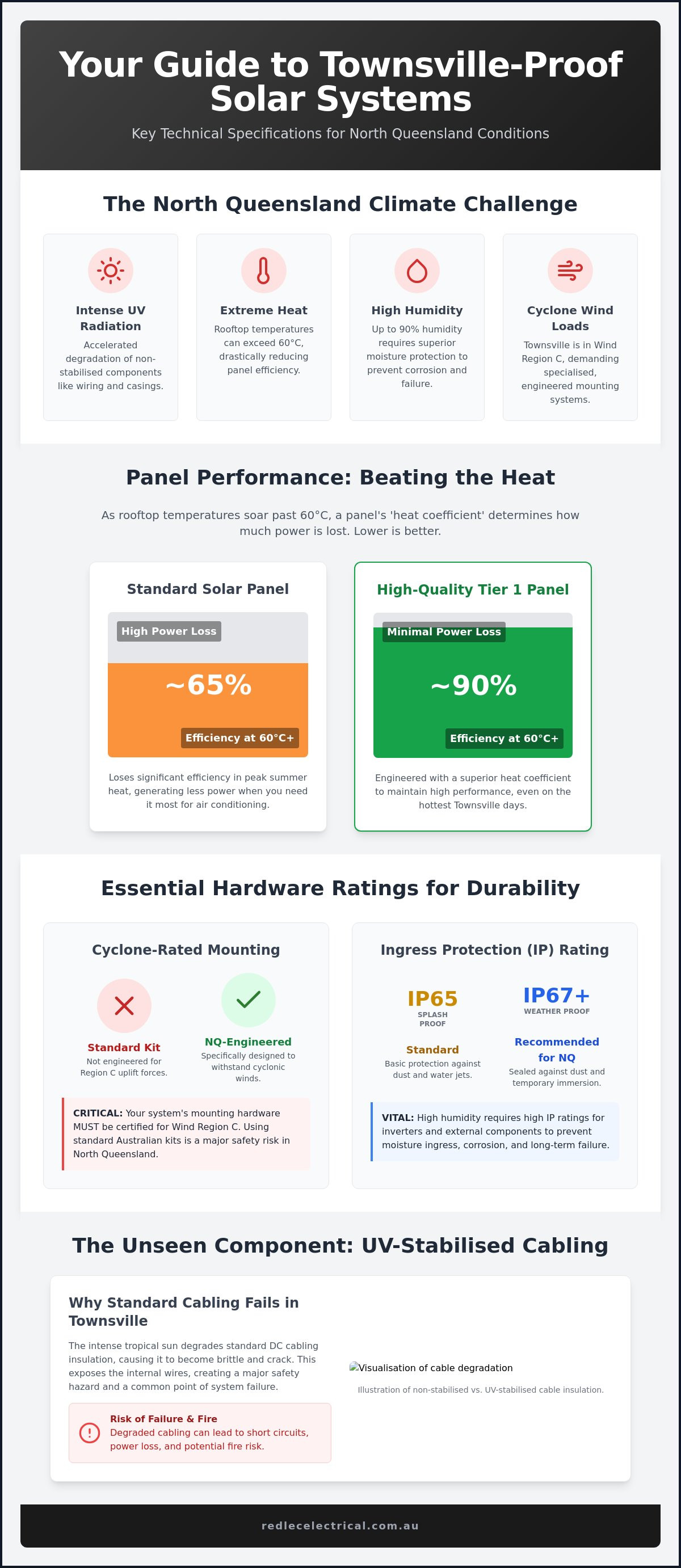
Townsville sits firmly in Wind Region C, which means every piece of hardware must be cyclone-rated. You cannot simply use standard Australian mounting kits here; they must be specifically engineered for North Queensland’s extreme wind loads and uplift. If your home was built before the 1980s, we suggest a structural assessment. Older roof trusses weren’t always designed with the weight of modern solar power systems in mind, and verifying your rafters can handle the load—a step that Rescue Roofing Tulsa suggests is vital for any major rooftop project—provides essential peace of mind before the next storm season arrives.
Switchboard and Smart Meter Requirements
Your switchboard is the heart of your home’s electrical system. Many older Townsville properties require a switchboard upgrade to safely house the new circuit breakers and safety switches required for a modern inverter. You’ll also need a smart meter installed by your retailer. This device is the only way to accurately track your energy export to the Ergon grid, helping you understand your usage patterns so you can decide exactly when it makes financial sense to add a battery storage system.
Stage 2: Technical Specs Checklist – Choosing “Townsville-Proof” Gear
Selecting components for solar power systems in North Queensland is a different challenge than choosing gear for a home in Melbourne or Sydney. Our unique combination of intense UV radiation, high humidity, and extreme heat can quickly degrade equipment that isn’t up to the task. We focus on “Townsville-proof” gear because we’ve seen how quickly budget components can fail under the tropical sun. This commitment to quality is mirrored by specialists globally; you can learn more about MarGav Solar, learn more about Jelvis or Trust Boilers & Renewables and their approach to renewable energy solutions. Ultimately, it’s not just about the brand name; it’s about the technical specifications that ensure your investment survives our local climate.
One of the most critical specs to check is the heat-coefficient rating of your panels. As temperatures on your roof soar past 60 degrees Celsius in mid-January, standard panels lose efficiency. High-quality Tier 1 panels are engineered to maintain better performance even as they heat up. This ensures you’re still generating maximum power when you need your air conditioning most. Fortunately, the Small-scale Renewable Energy Scheme provides financial incentives that make these premium, high-efficiency panels much more accessible for local families.
The “hidden” hero of a long-lasting system is the cabling. We’ve seen many installations where the panels were fine, but the system failed because the wiring wasn’t properly UV-stabilised. In Townsville, the sun can turn standard plastic conduit brittle in just a few years. Ensure your installer uses high-grade, UV-protected materials and that all cabling is neatly tucked away from direct exposure. If you suspect your existing setup is suffering from weathered components, an expert review of your solar inverter repair Townsville options can prevent a small fault from becoming a major safety issue.
Tier 1 Panels vs. Budget Alternatives
Why do we insist on Tier 1? In our high-humidity environment, cheap panels are prone to delamination. This happens when the moisture in the air gets between the layers of the panel, causing them to peel apart and fail. Always verify that the manufacturer has a physical office in Australia. If a fault occurs five years from now, you want a local team to handle the warranty claim, not a generic email address overseas. You should expect less than 0.5% degradation per year from a quality panel, even in the tropics.
Inverter Placement and Protection
Heat is the number one enemy of inverter longevity. While many modern inverters have high IP ratings for moisture and dust protection, they still shouldn’t be baked in the direct afternoon sun. We always look for a shaded, well-ventilated spot on the side of the house or inside a garage. Beyond physical placement, protecting your electronics from electrical surges is vital for long-term performance; you can learn more about Energy Control Systems and their specialised power quality solutions. If your roof has complex angles or shading from nearby trees, micro-inverters or power optimisers are often the better choice. They allow each panel to work independently, so a bit of shade on one corner doesn’t shut down your entire solar power systems output.
Stage 3: The Financial Checklist – Rebates, ROI, and 2026 Incentives
Once you’ve confirmed your roof is ready and your gear is “Townsville-proof”, it’s time to look at the numbers. The financial landscape for solar power systems has shifted significantly as we enter July 2026. While the typical payback period in Townsville remains a very attractive 3 to 6 years, how you reach that break-even point has changed. With retail electricity rates sitting at approximately 32 cents per kWh, the focus has moved from selling power back to the grid to keeping every watt you produce within your own four walls.
The regional feed-in tariff for Townsville is now 6.006 cents per kWh, effective from 1 July 2026. When you compare that to the 32 cents you pay Ergon to buy power, the math is clear. Every unit of electricity you export is essentially a lost opportunity to save 26 cents. This is why many local families are now prioritising solar battery storage to capture that daytime harvest for use after the sun goes down. It’s the most effective way to protect yourself from rising retail costs while making the most of your investment.
Understanding STCs in 2026
The federal government’s Small-scale Technology Certificate (STC) scheme is still active, but it’s in a scheduled phase-out period. Each year on 1 January, the value of this upfront discount reduces slightly until the program ends in 2030. Because Townsville is located in Zone 1, we still receive the highest value for these certificates in Australia, but waiting until 2027 will almost certainly increase your out-of-pocket costs. Most installers handle the paperwork for you, applying the STC value as a point-of-sale discount, but it’s worth checking your quote to see exactly how many certificates your system earns.
Maximising Self-Consumption
To get the best return on your solar power systems, you need to change how you use your appliances. Since exporting power is no longer the primary goal, you should aim to run your heaviest loads when your panels are peaking. Consider these simple scheduling shifts:
- Set your pool pump to run between 10:00 am and 2:00 pm.
- Use delay timers on your dishwasher and washing machine for midday cycles.
- Pre-cool your home by running the air conditioner in the early afternoon while the sun is still high.
The introduction of the expanded “Cheaper Home Batteries Program” in May 2026 has also changed the ROI calculation. This program provides a discount of around 30% on the upfront cost of eligible battery systems. When you combine this lower entry price with the current 6.006-cent feed-in tariff, the financial case for energy independence has never been stronger for North Queensland households. For a detailed walkthrough of how to select and install the right storage solution for your property, our guide to solar battery installation for Townsville homeowners and commercial solar power systems Townsville businesses rely on covers every step of the process.
While these incentives help reduce initial outlays, many property owners also look at refinancing to support their energy goals. For those with property interests in South-East Queensland, brisbanecityhomeloans.com.au can provide expert guidance on finding the right home loan solutions to fund your property improvements.
Stage 4: Installer and Maintenance Checklist – Avoiding the “Solar Cowboys”
Hardware is only half the story. Even the most advanced solar power systems will underperform if they aren’t installed with precision and care. In Townsville, we often see “solar cowboys” roll into town during a rebate boom or after a major storm. These companies usually offer rock-bottom prices but disappear the moment you need a warranty claim or technical support. Choosing a team that lives and works in the same community as you ensures they’ll be there to stand by their work when the weather turns rough.
Always verify the company has a physical office in Townsville. A PO Box or a “virtual office” on Flinders Street isn’t enough. A local warehouse means they have parts on hand and won’t make you wait weeks for a replacement inverter to arrive from Brisbane. You should also check for Clean Energy Council (CEC) Accredited Installer status. This isn’t just a badge of quality; it’s a strict requirement for accessing the federal STC discounts we discussed earlier. Without it, you could be left with a massive bill and no way to claim your incentives.
Questions to Ask Your Installer
Before you sign any contract, ask who is actually doing the work. Many large national firms use sub-contractors who are paid per job, which can lead to rushed installations. We recommend asking these three questions:
- “Who performs the actual install—your own employees or sub-contractors?”
- “What is your local process for a warranty claim on an inverter or panel?”
- “Do you provide a post-installation performance report to show the system is meeting its targets?”
The Importance of Regular Solar Repairs and Maintenance
North Queensland is tough on equipment. Between the fine dust of the dry season and the salt spray that drifts inland from the Strand and Pallarenda, your panels can lose up to 20% of their efficiency without a regular clean. We suggest scheduling an annual maintenance check to clear away debris and ensure your seals are still watertight. It’s also wise to have a professional check for “hot spots” or micro-cracks after a severe weather event, as these small issues can lead to system failure if left ignored. If you notice your inverter displaying error codes or your output has dropped unexpectedly, our comprehensive guide to solar inverter repair in Townsville can help you decode the fault and decide whether a repair or replacement is the smarter financial move. Partnering with a reliable electrical company in Townsville provides the long-term support you need to keep your energy independence on track for decades to come.
Stage 5: Final Review – Your 10-Point Pre-Purchase Summary
You’ve done the hard work of researching how to protect your home and your wallet. Now, it’s time to bring those details together. Choosing between various solar power systems doesn’t have to be overwhelming when you have a local roadmap to follow. This final checklist ensures your investment is technically sound, financially smart, and ready to stand up to whatever the North Queensland climate throws its way.
Before you sign on the dotted line, run through these ten essentials. Ensure your panel orientation matches your afternoon cooling needs and that your roof trusses are up to the task. Verify that every bracket and rail is specifically rated for Wind Region C. Confirm your panels have the high heat-coefficient ratings we discussed and that your inverter is tucked away in a cool, shaded spot. Finally, check that your chosen installer has a real Townsville office and a clear plan for annual maintenance to keep salt and dust at bay. If you can tick every box, you’re ready for a system that delivers genuine peace of mind.
Ready to Switch? Next Steps
Moving toward energy independence is a straightforward process when you’re prepared. We recommend taking these three simple steps to get the ball rolling:
- Gather your last four electricity bills. This helps us see your seasonal usage peaks and design a system that actually fits your life.
- Take a walk around your property. Look for any new growth on large palms or trees that might cast shadows on your North or West roof faces.
- Contact Redlec Energy Solutions. We’ll provide a detailed, no-obligation local quote that accounts for the latest 2026 incentives and your specific property needs.
The Redlec Difference in North Queensland
We take personal pride in being more than just another contractor; we’re your neighbours. Our team understands the unique challenges of the local grid and the harsh reality of our tropical humidity. Whether we are providing residential support or complex commercial electrical services, our focus is always on reliability and integrity. We don’t believe in high-pressure sales or “one-size-fits-all” bundles. We show up when promised, use gear that we’d trust on our own homes, and ensure your solar power systems are built to last well beyond the next big blow. It’s about providing professional, prompt results so you can get back to enjoying the Townsville lifestyle without worrying about the next power bill.
Secure Your Energy Future in North Queensland
Townsville’s weather doesn’t compromise, and neither should your home energy setup. By choosing high IP-rated inverters and ensuring every bracket is cyclone-rated for Region C, you’re building a system that stands firm. With the 2026 feed-in tariff changes, focusing on self-consumption through battery storage is now the smartest way to lock in long-term savings. Reliability in our tropics comes down to local knowledge and quality gear that can handle the humidity.
As a local, family-owned business, we’re here to help you navigate these technical choices with honest, straightforward advice. Our CEC Accredited Installers specialise in cyclone-rated solar mounting to give you total peace of mind before the next storm season arrives. We take pride in engineering solar power systems that are purpose-built for the North Queensland lifestyle.
Get Your Custom Townsville Solar Quote from Redlec Today
Taking control of your power bills is one of the best investments you can make for your property. For homeowners in Central Queensland looking to maintain other critical systems, CQR Plumbing provides professional gas fitting and drainage solutions to ensure your home is safe and efficient. We look forward to helping you achieve genuine energy independence and a more comfortable home for years to come.
Frequently Asked Questions
Do I really need a battery with my solar power system in 2026?
While a battery isn’t mandatory, it’s highly recommended in 2026 to maximise your financial return. With the regional feed-in tariff at 6.006 cents per kWh and retail rates around 32 cents, storing your own power is far more profitable than exporting it. The federal 30% discount on eligible battery systems through the updated Small-scale Technology Certificate scheme makes this an ideal time to invest in energy independence.
How long does a typical solar installation take in Townsville?
Most residential installations are completed in a single day, though the total process involves a few extra steps. You’ll usually wait between four to six weeks for the necessary Ergon Energy network approvals and smart meter scheduling. We handle all the technical paperwork and grid applications to keep the transition as smooth and prompt as possible for your household.
Will solar panels protect my roof during a cyclone?
Solar panels don’t provide extra protection; they actually change the wind loads acting on your home. This is why it’s vital that all solar power systems in Townsville use mounting hardware specifically engineered for Wind Region C. Properly installed, cyclone-rated panels will stay secure during extreme gusts without compromising your roof’s structural integrity or safety.
What happens to my solar power during a blackout?
Standard solar systems will automatically switch off during a blackout to protect technicians working on the external grid. If you want your lights to stay on when the neighbourhood goes dark, you’ll need a battery storage system with a dedicated “backup” or “island mode” function. This allows your home to operate independently from the Ergon network during an outage. Our complete guide to solar battery installation in Townsville explains exactly how to choose and set up a system with backup capability for both residential and commercial solar power systems Townsville properties depend on.
How much maintenance do solar power systems actually need in North Queensland?
You should schedule a professional clean and safety inspection at least once a year. Townsville’s salt spray and fine dust can build up quickly, potentially reducing your efficiency by up to 20% if left unaddressed. A quick annual check ensures your cabling remains UV-safe and your solar power systems are performing at their peak after our intense summer heat.
Can I add more panels to my existing system later?
You can often add more panels later, provided your inverter has the spare capacity to handle the extra load. If your current inverter is already at its limit, we can discuss adding a second smaller system or upgrading to a larger hybrid model. It’s always helpful to mention potential future growth during your initial site assessment so we can “future-proof” your setup.
Are there still government rebates available for solar in Townsville?
Yes, federal STC rebates are still available in 2026, though they reduce slightly every January as part of a scheduled phase-out. Townsville remains in Zone 1, which qualifies for the highest level of upfront discount in Australia. Landlords can also access the “Supercharged Solar for Renters” rebate, which offers up to $3,500 for systems 5 kW or larger installed on rental properties.
What is the “feed-in tariff” and how does it work with Ergon?
The feed-in tariff is the credit you receive on your electricity bill for any excess power you send back to the Ergon grid. As of July 2026, the rate in regional Queensland is 6.006 cents per kWh. Because this is significantly lower than the cost of buying power, your financial focus should be on “self-consumption”—using your appliances during the day or storing power in a battery.